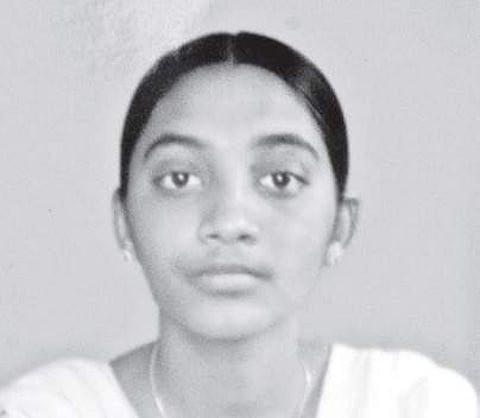

VIJAYAWADA: The prosecution’s argument in the Ayesha Meera rape and murder case rests mainly on the DNA test results. When the DNA profile of Satyam Babu, the main accused, matched the DNA profile of vaginal swabs and semen stains collected from the victim’s body, could there be any more doubt about his guilt? The Hyderabad High Court, in its verdict setting Satyam Babu free, was not convinced of this “clinching proof” and found that “the procedure followed by the investigation agency and the forensic science laboratory (FSL) casts a serious cloud of suspicion on the credibility of the DNA report.”
The verdict by the two-member bench, comprising Justice CV Nagarjuna Reddy and Justice MSK Jaiswal, pointed out that the prosecution sought to buttress its case with the versions of the doctor who conducted the autopsy, DNA fingerprint expert, DNA report and chemical analysis report, and went on to closely examine all of them.
The doctor’s version
The doctor, in his report, said vaginal swabs, vaginal smears and pubic hair of the victim showed human semen and spermatozoa which indicated recent sexual intercourse. He admitted that in case of a sexual offence, the preservation of vaginal swabs and smears have much relevance and if not preserved properly, they will become unfit for analysis after some time. He deposed that the inspector of police, Ibrahimpatnam, gave him a requisition in writing on December 27, 2007 for preserving vaginal swabs and semen stains and that in the instructions, clearly asked him to examine the body of the deceased to find out whether rape was committed.
He further deposed that on January 1, 2008, he sent the MOs (material), addressed to the FSL, via the Assistant Commissioner of Police, West Zone, Vijayawada, who in turn sent the same to the FSL.
He denied the suggestion that he had not sent the MOs to the FSL till the appellant (Satyam Babu) was arrested. He, however, admitted that he did not have any record to show that he had handed over the vaginal swabs and semen stains collected from the deceased to the police but claimed that the “proceedings in which he has sent them to the police were referred to in the dispatch register of their department.”
In effect, he admitted that there was no document on record to show that he had handed over the vaginal swabs and semen stains to the police.
According to him, he received the chemical analysis report from FSL on February 2, 2008 through a police constable but there was no mention therein that the DNA test was conducted. Neither was any DNA profile, pertaining to the MOs collected from the body of Ayesha, enclosed. He further admitted that he had not received any document from the FSL to show that DNA test was conducted for the MOs submitted by him on or before February 2, 2008 or that he had received the DNA profile on or before the said date.
DNA fingerprint expert says
The DNA fingerprint expert, who also analysed the blood and hair of Satyam Babu, stated in his cross examination that he had received a letter dated January 10, 2008 for conducting DNA profiling of vaginal swabs, smears and the pubic hair of the deceased. He said that serology sections received vaginal swabs, smears and hair on January 9, 2008. But, he later revised the date of the letter of advice to January 3, 2008. He said he did not know whether the MOs were in transit between January 3 and January 9 but said he had received the MOs on Jan 11 from the Serology Department. He also deposed that he had conducted the DNA profiling and that he generated the DNA profile on February 13 but did not send it to the police.
The court, in its verdict, found the following admissions by the witnesses crucial.
“We can generate DNA profile from the left overs available in our department. I have not sent the copy of DNA profile generated by me on Feb 13, 2008 to the police.”
“I preserved it in the system for comparing the DNA profiling of the suspects. I have compared the samples of eight suspects. I cannot say the date of generating DNA profile for eight suspects as I have only brought the record pertaining to Satyam Babu”
Most crucial aspect
The most crucial aspect was whether the DNA fingerprint expert had done the DNA profiling on the alleged vaginal swabs and smears of the deceased (Ayesha) on February 13 as deposed by him.
By his own admission, he had not sent the DNA profile allegedly generated by him on February 13 to the police.
“Thus, it is evident that till the blood and hair samples of the appellant (Satyam) were sent to him, the existence of the DNA profile of the deceased was not in the know of anyone, including the police and the court. In the absence of standard DNA profile of the deceased made known to anyone, it was not difficult for the FSL to manipulate the DNA report by comparing the DNA profile of the deceased with left overs belonging to the deceased available with the FSL as suggested by the defence,” the court ruled. The FSL as well as the investigating agency have not maintained transparency right from the stage of collecting the samples from the body of the victim and in properly preserving and sending them till the alleged DNA profiling was done, it concluded, adding that the procedure adopted by the investigation agency was susceptible to manipulation in preparing DNA profile to falsely implicate anyone as they wish.
“When the DNA profiling was allegedly generated on February 13, 2008, the same along with the left overs should have been sent to the investigating agency which in turn should have produced the same before the court for being preserved.”
“This would have ruled out any possibility of manipulation of DNA report as suspected to have been done to falsely implicate the appellant,” the court reasoned.
In the absence of such procedure being followed, it is not difficult for the police and the FSL, a government agency under the control of the police department, to manipulate the DNA results to suit their purposes and to falsely implicate Satyam Babu, it said.
