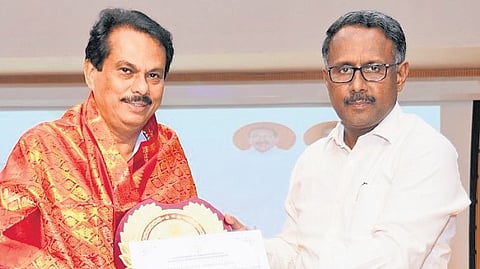

VIJAYAWADA: The Municipal Administration & Urban Development (MA&UD) Department, State government convened a state-level workshop and performance review at the School of Planning and Architecture, Vijayawada, bringing together 123 Municipal Commissioners and Engineers from Urban Local Bodies (ULBs) across the State.
Senior officials from the Sanitation & Infrastructure Corporation (SAC), the Commissioner & Director of Municipal Administration (CDMA), and the Engineer-in-Chief of the Public Health Department also participated. The proceedings were presided over by S Suresh Kuma, Principal Secretary, MA&UD Department.
The morning technical session focused on the newly notified Municipal Solid Waste (MSW) Rules, 2026 and preparations for Swachh Survekshan 2025-26.
Million-plus cities must achieve compliance within 18 months, cities with populations between five and ten lakh within 24 months, and all other ULBs within 36 months. The State Urban Development Department was tasked with preparing a comprehensive SWM policy, onboarding all ULBs onto the national portal, integrating SWM facilities into master plans by September 30, 2026, and ensuring annual registration of waste pickers by June 30. Commissioners were briefed on Swachh Sarvekshan parameters, including 100% door-to-door collection, source segregation, operationalisation of Material Recovery Facilities, and timely data uploads. The clearance of 115 lakh metric tonnes of legacy waste out of 158 lakh MT was highlighted as a major milestone.
The afternoon review session covered ten critical areas of urban governance: property tax collection, shared services under MSSC and the AP Urban Digital Registry, APCMMS app usage and service indicators, animal birth control and anti-rabies vaccination, traffic signals and RLVD e-challans, drinking water supply under the Summer Action Plan 2026, burial ground maintenance, road safety and heat wave preparedness, de-siltation of drains before the monsoon, and ward delimitation.
Property tax performance was noted with a 16.57% growth in FY 2025-26, with collections reaching Rs 2,354.13 crore against a demand of Rs 5,187.42 crore. Current year demand stood at Rs 2,556.71 crore, of which Rs 1,960.74 crore (76.69%) was collected.