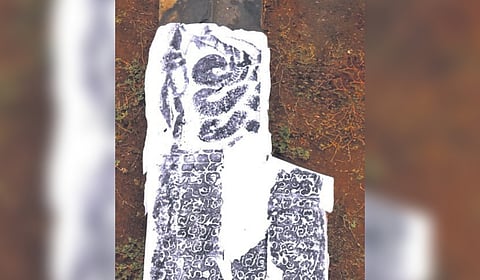

ONGOLE: A 13th-century Telugu inscription recently copied by the Archaeological Survey of India (ASI) epigraphy wing during its survey in the Nallamala Tiger Reserve has been traced to the Kakatiya Rudrama Devi period, shedding new light on the survival of Buddhism in the Krishna river basin and Amaravati region up to the 13th century CE. The fragmentary inscription, engraved on a slab with a stupa and Muchalinda naga figures, was found near Ayyambholapalle in Yerragondapalem mandal, Prakasam district.
Written in Telugu, it dates to May 16, 1285 CE (Saka 1207). It records the gift of Velmapalli village to Buddhadeva of Sridhanyam (then Dhanyakataka) for rituals on the Krishna River by Bolayani Mallikarjuna Nayaka, a commander under Rudramadevi.
The discovery challenges the belief that Buddhism declined after the 7th century.
ASI Director (Epigraphy) Dr K Muniratnam Reddy said the inscription shows the Amaravati stupa remained glorified from the 4th century BCE to the 13th century CE, highlighting its enduring heritage.
