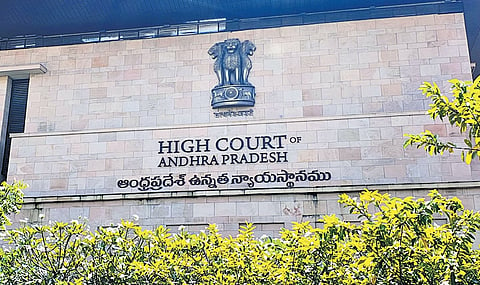

VIJAYAWADA: The Andhra Pradesh High Court has expressed serious concern over the indiscriminate exploitation of natural resources, particularly the large-scale excavation of sand and earth from water bodies. Emphasising the Public Trust Doctrine, the court observed that natural resources such as air, water and forests are gifts of nature and cannot be treated as the property of any individual, private organisation or even the government.
The State acts only as a trustee on behalf of the people and has a constitutional obligation to conserve these resources for the benefit of both present and future generations, the court said.
Justice Kuncham Maheswara Rao made these observations while setting aside proceedings issued by the District Collector of Vizianagaram permitting the excavation of sand and earth from Kannam Naidu Cheruvu in Kothapalem village of Bondapalli mandal for National Highway construction under the Economic Corridor project.
The court also directed the State government to strictly implement the Standard Operating Procedure (SOP) issued on May 8 for the protection of natural resources and instructed the Chief Secretary to conduct annual review meetings to monitor compliance and prevent environmental degradation.
The petition was filed by local residents, including Boddu Satyavathi, who contended that Kannam Naidu Cheruvu is the primary source of irrigation and drinking water for their village and neighbouring habitations. The Court accepted that the ecological and public importance of the water body could not be overlooked.
The judgment underscored that environmental protection is not a modern concept but an integral part of India’s cultural and spiritual heritage. Justice Maheswara Rao observed that the constitutional right to life extends beyond mere physical survival and includes the right to live in a clean, safe and healthy environment.
Environmental protection, therefore, must remain an inseparable component of governance and public policy. The Court further clarified that contractors executing National Highway projects are engaged in commercial activities for profit and cannot claim exemption from environmental laws. Procuring construction material through lawful means is entirely their responsibility, and any unauthorised excavation of natural resources constitutes a violation of law.
Highlighting intergenerational equity, the Court remarked that the decisions taken today to preserve the environment may not yield immediate economic benefits but will become the most valuable legacy for future generations. It noted that ancient reservoirs across Andhra Pradesh were constructed not for the glory of rulers but for public welfare and sustainable water conservation. Whenever administrative failure or official inaction threatens natural resources, the judiciary is duty-bound to exercise its constitutional powers to protect public interest.
