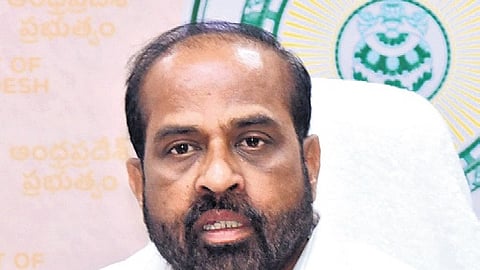

VIJAYAWADA: Health Minister Y Satya Kumar Yadav has directed officials to ensure strict compliance with biomedical waste management and sewage treatment norms in all government hospitals. He asserted that hospital sanitation must adhere to statutory guidelines without exception.
Chairing a high-level review meeting with senior officials and experts on Friday, the Minister expressed concern over gaps between prescribed legal standards and their implementation. He instructed officials to prepare a comprehensive action plan to address deficiencies and strengthen monitoring mechanisms.
Officials informed the Minister that biomedical waste including blood and pus, stained bandages, used syringes and needles, sharp blades, removed tissues and organs, expired medicines, and discarded medical equipment accounts for nearly 400 grams per hospital bed every day.
Government teaching hospitals alone are estimated to generate around 1.3 million kgs of biomedical waste, which must be scientifically segregated, transported, and disposed of as per regulations.
Satya Kumar Yadav directed hospitals to establish robust mechanisms for the timely collection, segregation, and transportation of biomedical waste using designated colour-coded bags. He also ordered that the entire process be monitored through CCTV surveillance and barcode-based tracking to ensure transparency and accountability.
The Minister also expressed dissatisfaction over the lack of adequate sewage treatment facilities in government hospitals. He pointed out that only the Area Hospitals at Nuzvid and Banaganapalle currently have Sewage Treatment Plants (STPs) among secondary hospitals, while 17 of the state’s 40 teaching and super-specialty hospitals do not have STPs.
It was decided to establish STPs in 17 teaching and specialty hospitals under the Directorate of Medical Education and in 54 Area Hospitals and nine District Hospitals under the Directorate of Secondary Health, covering a total of 80 hospitals.
Officials estimated that the project would cost Rs 83 crore, with construction expected to be completed within 10 months. The Minister said the installation of STPs would improve environmental compliance as well as the quality and accreditation ratings of government hospitals.
Satya Kumar Yadav also stressed the need to reduce unnecessary crowding in hospitals to minimize the risk of infections. As part of the initiative, measures will initially be implemented in ICUs and other wards to regulate visitor access. Attendants and visitors will be allowed only during designated visiting hours, and officials have been instructed not to entertain any recommendations for exceptions.
A pilot project to implement the new visitor management system will be launched at the Government Teaching Hospitals in Anantapur, Vijayawada, and Srikakulam. The Minister further directed that only patients with valid outpatient (OP) slips be permitted to enter designated treatment areas within hospital premises to streamline patient flow and improve infection control.
