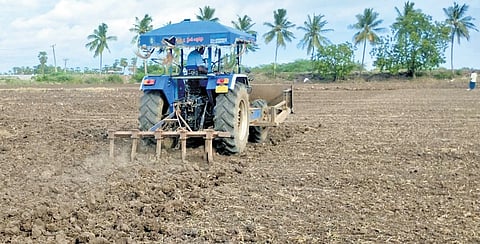

VIJAYAWADA: The absence of awareness campaigns at the grassroots level and the lack of timely, reliable information have emerged as major challenges confronting farmers in the State, often resulting in crop losses, financial distress and mounting debts.
With critical decisions on cultivation, crop selection and input management increasingly being taken without scientific guidance, farmers say they are being left vulnerable to avoidable risks season after season. Despite the State possessing an extensive agricultural extension network, crucial information on weather conditions, crop advisories, seed varieties and fertiliser management is often failing to reach farmers when it is needed the most.
The issue has once again come to the fore with the onset of the Kharif season.
While the southwest monsoon has entered Andhra Pradesh through the Rayalaseema region and scattered rainfall has been reported in some districts, uncertainty continues to prevail over the likelihood of sustained rainfall across the State.
At the same time, except in parts of the Godavari delta, irrigation water is yet to be released in several regions, leaving farmers dependent largely on monsoon conditions.
As farmers begin procuring seeds from private dealers and their own stocks, and with government seed distribution expected shortly, many remain undecided about whether to commence cultivation operations or wait for more favourable weather conditions.
The absence of clear advisories has only added to their confusion.
Farmers point out that the first spell of rain often prompts cultivation activities in villages. Encouraged by the initial showers, they invest in land preparation, seeds, fertilisers and labour.
However, if rains fail to continue, crops face moisture stress during the germination stage, resulting in poor crop establishment and financial losses.
On the other hand, delaying cultivation in anticipation of better rainfall may also affect productivity. In the absence of reliable guidance, farmers are often forced to make decisions based on assumptions rather than scientific recom mendations.
Agriculture experts observe that timely information has become as important as seeds, fertilisers and water in modern-day farming.
However, many farmers allege that awareness programmes, field-level meetings and interactive sessions have become increasingly rare, particularly during the crucial pre-sowing period. Information relating to crop planning, suitable crop varieties, soil testing, fertilizer application, irrigation schedules, pest management and crop loan facilities is not reaching farmers in a systematic and timely manner, they contend.
Farmers argue that the problem is not the lack of information but the failure to communicate it effectively. They point out that government departments already possess comprehensive databases containing farmers’ details and mobile phone numbers. By leveraging technology, authorities can disseminate real-time advisories directly to farmers through mobile phones, much like disaster management alert systems.
‘’I have been cultivating paddy in 10 acres over the years using the broadcasting method. I usually scatter the seeds after ploughing the paddy field based on the first spell.
Many times, my crop was damaged due to water scarcity. If you have any prior information regarding weather conditions, water availability like water release for canals etc , it would definitely help many farmers like us,’’ said K Krishna, a farmer of Vadlamannadu in Krishna district.
‘The consequences of this information gap are often severe. Wrong decisions taken at the beginning of a crop season can lead to lower yields, crop failures and increased cultivation costs’ said another farmer U Venkateswarlu of Kollipora village in Tenali mandal, Guntur district.
Regular updates on rainfall forecasts, reservoir water releases, crop recommendations, input availability, pest outbreaks and government schemes could help farmers make informed decisions and significantly reduce risks. Such a system, farmers believe, would bridge the gap between scientific knowledge and field-level implementation.
