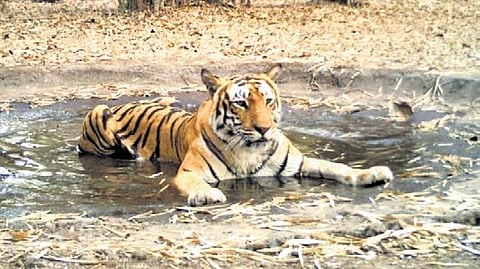

KURNOOL: The steady rise in tiger numbers at the Nagarjunasagar-Srisailam Tiger Reserve (NSTR) is being celebrated as a major conservation success. But wildlife experts say the real test now is not how many tigers the reserve has, but whether the forests can continue to sustain them in the long run.
Spread across the Nallamala forests of Andhra Pradesh and Telangana, the NSTR is India’s largest tiger reserve, covering nearly 5,443 sq km. According to official estimates, the tiger population has increased from 47 in 2018 to 76 in 2024, excluding 11 cubs. The reserve has emerged as one of southern India’s most important tiger habitats and plays a key role in maintaining the Eastern Ghats tiger landscape.
Former NSTR Field Director and Chief Conservator of Forests B Vijaya Kumar says India’s tiger conservation programme has entered a new phase where ecological stability must take precedence over simply increasing tiger numbers.
The growing tiger population has already begun expanding beyond the reserve. Monitoring records show that three male tigers from the Atmakur region and one female from the Markapur area have dispersed into the neighbouring Amrabad Tiger Reserve in Telangana. Experts view such movement as a sign of a healthy breeding population and evidence of the ecological importance of the NSTR-Amrabad corridor along the Krishna river basin.
However, these wildlife corridors face increasing pressure from road expansion, infrastructure projects, irrigation works and other human activities. Conservationists warn that disruption of these natural pathways could isolate tiger populations, reduce genetic diversity and threaten their long-term survival.
Another challenge is the declining prey base in parts of the Nallamala forests. Field surveys and camera-trap studies have found uneven populations of chital and sambar, particularly in the eastern and northern ranges.
Livestock grazing, habitat degradation and excessive extraction of forest resources have reduced the availability of natural prey, forcing tigers and leopards to stray into villages in search of food and increasing incidents of livestock attacks.
Experts have also highlighted a less-discussed threat — disease transmission. Stray dogs in villages bordering the reserve can spread canine distemper and other infections to wild carnivores. Wildlife specialists have recommended vaccination and sterilisation drives in more than 110 fringe villages to reduce this risk.
Questions have also been raised by some wildlife enthusiasts over the transparency of tiger population estimates. While official figures indicate a steady rise, conservation observers say the latest survey data, including the number of breeding females, cubs and dispersing tigers, should be placed in the public domain to strengthen confidence in conservation efforts.
