
VIJAYAWADA: In a significant step towards strengthening sustainable urban waste management and promoting clean energy generation, the Government of Andhra Pradesh has accorded administrative sanction for Rs 59.85 crore for the establishment of five Compressed Bio Gas (CBG) plants across key Urban Local Bodies (ULBs) in the State.
The sanction, issued through an order, aims to operationalise municipal solid waste (MSW)-based bio-energy infrastructure with a total processing capacity of 125 tonnes per day (TPD). The proposed projects will be taken up in Rajamahendravaram, Nellore, Guntur and Ongole, along with the revival and upgradation of an existing plant in Vijayawada.
Each of the four new plants will have a capacity of 25 TPD, while the Vijayawada facility will also be upgraded to handle 25 TPD. The initiative is being implemented with technical consultancy support from CSIR-Indian Institute of Chemical Technology (CSIR-IICT), Hyderabad, following the State’s decision to shift strategy after lack of response to earlier PPP tenders.
The revised project framework aligns with updated Government of India cost norms, under which the cost of a 100 TPD CBG plant has been enhanced to Rs 32 crore. Accordingly, the cost of each 25 TPD plant has been recalibrated to Rs 12.60 crore, inclusive of civil works and equipment.
The Vijayawada plant revival has been estimated at Rs 9.45 crore. The funding structure includes contributions from the Government of India, the State Government, Urban Local Bodies, and private developers, with developers bearing approximately 36% of the project cost and recovering investments through CBG sale revenues over a 20-year operation and maintenance period.
Swachh Andhra Corporation (SAC) will act as the nodal agency for implementation and will invite tenders based on technical specifications provided by CSIR-IICT. A tripartite agreement will be executed among SAC, the respective ULB Commissioners, and the selected developers for execution and long-term operation.
ULBs have been tasked with facilitating land and basic infrastructure, including road access, water, and power supply, while also monitoring project progress and ensuring timely reporting.
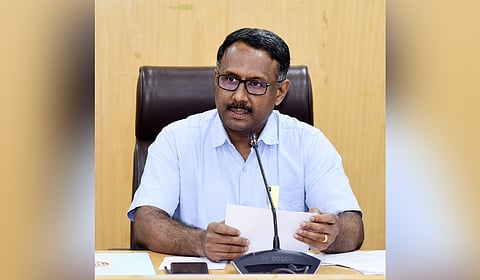
Highlighting the significance of the initiative, Principal Secretary (Municipal Administration & Urban Development) S Suresh Kumar said the project represents a transformative shift in urban waste management by converting municipal solid waste into valuable clean energy. He emphasised that the integration of scientific processing technologies with long-term private sector participation will ensure both environmental sustainability and financial viability.
