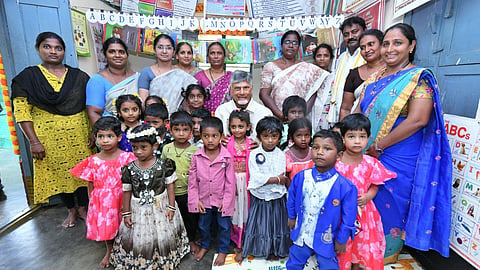

VIJAYAWADA: Population management, with a focus on treating children as wealth under the ‘Pillale Sampada’ framework, was discussed at length during the Andhra Pradesh Cabinet meeting chaired by Chief Minister N Chandrababu Naidu on Thursday.
The issue was close to the heart of the Chief Minister, who has consistently advocated the birth of more children to secure the State’s future and ensure Andhra Pradesh retains the advantage of a demographic dividend.
According to sources familiar with the deliberations, the State faces a demographic paradox.
The Total Fertility Rate (TFR) has already dropped to 1.5, well below the replacement level of 2.1, while the elderly share of the population is projected to rise from 17.6% today to 28% by 2047.
At the same time, the working-age population, currently at 62.9%, is expected to shrink to 57%, raising fears of a shift from demographic dividend to demographic debt.
The Cabinet discussion built on recent review meetings chaired by Naidu, where he warned that Andhra Pradesh risked slipping into a situation similar to ageing societies in East Asia. District-level fertility data was presented last month, showing Kadapa at 1.99 and Visakhapatnam at 1.32.
Naidu directed officials then to prepare incentives for larger families and stressed the need to move from ‘population control’ to ‘population care.’ Thursday’s deliberations formalised those ideas into a structured framework.
Five-pillar life cycle model
Matrutva (Reproductive & fertility care): Ensuring every pregnancy is wanted and healthy through spacing methods, infertility care, safe motherhood, and adolescent health.
Sanjeevani (Digital health backbone): A statewide ABDM-compliant digital platform with ABHA IDs, AI-driven analytics, and citizen apps for teleconsultation and digital health records.
Shakti (Women’s empowerment): Measures to boost female labour force participation, including workplace creches, hostels, pre-marital counselling, and the #TalliTandrulaSamanaBadhyata campaign for shared parenting.
Kshema (Active ageing & elderly care): Reframing ageing as a ‘Silver Dividend’ with a Silver Skills Registry, expanded geriatric wards, bi-weekly clinics, and strengthened pension and mental health support.
Naipunyam (Lifelong skilling): Preparing workforce for the care economy, establishing a State Skills Observatory, and linking job tracking to family cards.
The framework proposes a Population Management Index (PMx)—a real-time wellness scorecard (0–100) tracking fertility behaviour, maternal health, and demographic indicators. Secretariats will be classified into Green (75–100), Yellow (50–74), and Red (<50) zones to prioritise interventions.
Monthly Gram Sabhas, mandated on the fourth Saturday, will publicly display PMx scorecards, review red flags such as falling fertility, migration, and ageing, and co-create village-level action plans with ASHAs, ANMs, SHGs, and panchayat members.
Sources said the Cabinet also discussed an indicative incentive package to encourage higher fertility: (Rs 25,000 direct birth incentive for every second childbirth), housing support (Additional 80 sq. ft. room for families with third child or above), Deepam-2 scheme (Fourth LPG cylinder refill for families with third child or above), Nutrition support (3 kg millets per month for families with third child or above)
The first-year outlay is pegged at Rs 993.9 crore. Educational support under Talliki Vandavanam will continue irrespective of family size.
The governance architecture envisages a State Mission on Population Management chaired by the Chief Minister, a High-Powered Steering Committee under the Chief Secretary, and a Population Management Task Force led by the Health Secretary.
