
VIJAYAWADA: In a major push toward clean energy generation and asset monetisation, the Andhra Pradesh Government is moving to harness idle water resources assets to install 903 megawatts of solar power capacity across the State.
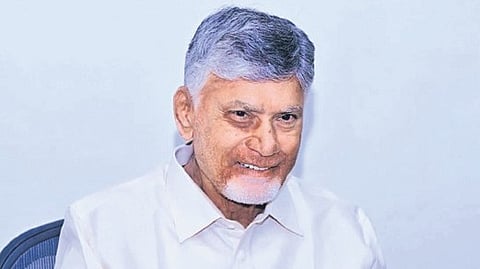
Reviewing the rehabilitation of lift irrigation schemes, irrigation land usage for solar power generation, and progress on priority water projects at his camp office on Wednesday, Chief Minister N Chandrababu Naidu emphasised that integrating solar energy with agricultural infrastructure will foster long-term wealth creation.
Expanding on this blueprint, the Chief Minister suggested exploring solar power generation across canal networks and integrating hydro-electric capabilities.
He noted that ensuring uninterrupted power supply to lift irrigation schemes during peak agricultural seasons while feeding surplus power back into the grid will generate recurring revenue, tying together transportation, power production, clean energy, and agriculture.
Officials reported that 4,061 acres out of 5,565 available acres under the Water Resources Department have been identified for solar power plants, yielding an estimated 877.3 megawatts.
Alongside the clean energy drive, the Chief Minister directed water resources officials to take up comprehensive restoration of 789 lift irrigation schemes that fell into disrepair due to the previous administration’s neglect, ensuring they are fully operational and ready to release water by June. Restoring these schemes requires an estimated Rs 632.07 crore, which will reliably restore irrigation water access to 7.49 lakh acres for the kharif season.
To ensure long-term maintenance, the Chief Minister mandated that monitoring be routed through the Jalaharati Corporation, proposing a dedicated wing with a Chief Engineer or Superintending Engineer for every district.
To bring structural efficiency to water resource management, the Chief Minister called for a feasibility study on establishing a Water Regulatory Commission modelled on the Electricity Regulatory Commission.
Pointing out that regulatory frameworks already exist in power and ports, he emphasised that a dedicated regulator could streamline allocation across agriculture, industry, and transport sectors.
