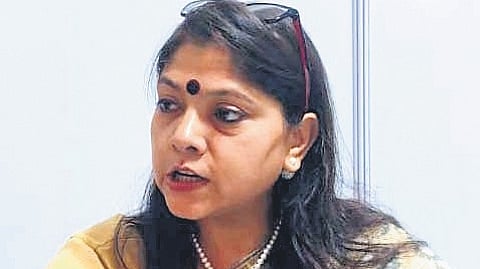

VISAKHAPATNAM: As Visakhapatnam attracts several hyperscale data centre investments, concerns over their impact on water resources, electricity consumption and the environment are growing. While these facilities are expected to support the digital economy, their development must balance business interests with community welfare and environmental protection, says ReNew co-founder Vaishali Nigam Sinha.
ReNew, which has announced a proposed 1 GW data centre in Andhra Pradesh, believes renewable energy, adopting new technologies and responsible resource management will be crucial to the sector’s growth. In an interaction with The New Indian Express on the sidelines of the 31st CII Partnership Summit in Visakhapatnam, Sinha discussed the environmental responsibilities of data centre operators and the need for sustainable technologies. Excerpts:
With several hyperscale data centres planned in and around Visakhapatnam, how should companies address growing environmental concerns?
Any development must be viewed from three perspectives: business, community and the environment. Data centres must balance all three. Electricity consumption, water usage and noise pollution are key concerns. Operators must adopt technologies that minimise resource consumption and prevent noise from affecting surrounding communities. Some newer facilities are reportedly exploring zero-water technologies. I hope more companies adopt such solutions. Equally important is engaging local communities and making them stakeholders in the transition.
How can ReNew’s renewable energy expertise help make data centres sustainable?
ReNew has a clean energy generation portfolio of over 20 GW and is already engaging with hyperscalers to supply renewable power and reduce their emissions. Data centres have substantial electricity requirements, creating an opportunity for companies like ours to support their transition to clean energy. At present, the approach is a combination of renewable energy procurement and carbon credits to offset emissions. It is a hybrid strategy. However, directly supplying clean energy is a better way to reduce emissions. The more renewable power we can make available to these facilities, the better.
What measures will ReNew adopt to address water consumption, cooling requirements and other environmental concerns at its proposed 1 GW facility?
The project is at a very early stage and operational plans are yet to be finalised. However, responsible growth and community engagement have been central to ReNew over the last 15-16 years, and the same approach will guide our expansion. Another aspect is innovation. Companies must adopt superior technologies for resource management, while regulators should ensure responsible practices. The same approach will guide our work as we expand into new areas.
What is your message to residents concerned about the impact of data centres on local resources?
These concerns are understandable. Companies must demonstrate responsibility in how they use electricity, water and other resources. They should engage communities and ensure development benefits people beyond immediate business interests. At ReNew, community engagement has been central to our renewable energy projects. Economic growth and environmental protection can go together if companies adopt responsible practices.
