
Andhra Pradesh is positioning itself as one of the country’s major industrial destinations, with investment proposals worth Rs 32.49 lakh crore and the potential to generate 19.3 lakh jobs through 714 projects since June 2024. The recently organised CII Partnership Summit has further strengthened the State’s investment prospects, attracting 109 investment agreements worth Rs 9,02,434 crore.
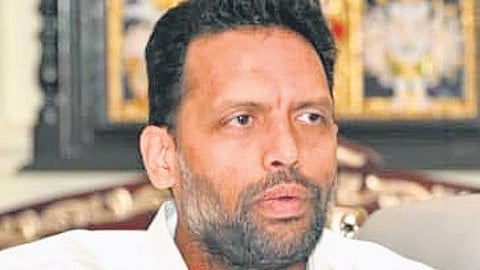
In an interview with K Madhu Sudhakar, Minister for Industries, Commerce and Food Processing TG Bharath outlined the government’s industrial growth strategy, highlighting the CII Partnership Summit, regional industrial clusters, infrastructure development and employment opportunities. He said Kurnool district, particularly the Orvakal Industrial Hub, was emerging as a major destination for renewable energy, semiconductor, food processing and manufacturing industries.
Excerpts:
How significant is the CII Partnership Summit in attracting investments to AP?
The CII Partnership Summit has given tremendous momentum to AP’s industrial growth. We secured 109 investment agreements worth Rs 9,02,434 crore during the summit. Apart from this, regional and other major investment summits resulted in 303 additional investment agreements, creating potential employment opportunities for 3,48,309 people. Since June 2024, the State has attracted proposals for 714 projects with a cumulative investment potential of Rs 32.49 lakh crore and employment opportunities for 19.3 lakh people. Our priority is not merely signing MoUs but ensuring that projects are grounded and begin production. For us, a signature is the beginning, while actual industrial production and employment generation are the ultimate goals.
What is the government’s strategy to ensure that these investments materialise?
We are adopting a cluster-based industrial development model similar to Japan. Instead of concentrating on a single sector, we are welcoming investments across aerospace, defence, drones, automobiles, pharmaceuticals, electronics, IT, renewable energy and food processing. We are moving from Ease of Doing Business to Speed of Doing Business. Industries will receive approvals through self-certification, real-time clearances and simplified procedures. We are also introducing an Investment Protection Act to provide legal protection to investors. An annual audit of industrial agreements will monitor implementation, while an escrow account will ensure timely payment of industrial incentives.
What is the importance of Orvakal Industrial Hub in Kurnool district’s development?
Orvakal is going to become one of the most important industrial destinations in Rayalaseema. Developed under the National Industrial Corridor Development Programme along the Hyderabad-Bengaluru Industrial Corridor, the industrial node has a basic infrastructure investment of Rs 2,786 crore, with works progressing as scheduled. We are targeting more than Rs 50,000 crore in investments in the Orvakal industrial cluster. Agastya Green Energy is establishing a major solar manufacturing facility with an investment of Rs 7,800 crore, while Grydonn Energy is setting up a solar cell and module manufacturing unit with an investment of Rs 3,149.5 crore. Reliance Consumer Products is preparing to commence operations at its Campa beverages manufacturing unit at Orvakal shortly. The company is also planning to invest an additional ?6,000 crore in the region, further strengthening Kurnool’s industrial growth prospects. Reliance Consumer Products is also preparing to establish a Campa beverages manufacturing facility with an investment of Rs 1,622 crore, besides an integrated food park involving Rs 768 crore. A proposed semiconductor manufacturing project worth Rs 23,000 crore by Indichip Semiconductors in partnership with Japan’s Yitoa Micro Technology is another major opportunity. These projects, along with steel industry expansion, airport connectivity improvements and other manufacturing investments, will transform Orvakal into a major industrial ecosystem.
How will industrial development benefit farmers and local youth in Kurnool district?
Kurnool has enormous potential in agriculture, horticulture and fruit production. Food processing is therefore one of our major priorities. Our initial target was to attract Rs 30,000 crore in food processing investments over five years, and projects worth approximately Rs 13,000 crore to Rs 15,000 crore have already been grounded across the state, including processing units in Pathikonda. Food processing industries will help farmers obtain better market opportunities and prevent distress sales of agricultural produce. At the same time, industrial projects will create employment opportunities for local youth and reduce migration. We are also establishing 175 MSME parks across constituencies to encourage local entrepreneurship and connect small industries with larger manufacturing units.
What measures are being taken to bridge the gap between education and industrial employment?
We are introducing a Skill Census to identify the capabilities and skill requirements of young people. Training programmes will be designed according to the requirements of upcoming industries. ITIs, engineering colleges and degree institutions will be connected with industries so that students acquire job-oriented skills even before completing their education.
Beyond industrialisation, what is your vision for Kurnool city?
As Kurnool MLA and Industries Minister, my objective is to transform Kurnool into a modern smart city with improved civic infrastructure. We are strengthening drinking water supply, drainage, sanitation, electricity and healthcare facilities. More than 800 damaged electrical poles have been replaced, while municipal hospitals and sports infrastructure are also being upgraded. Our focus is comprehensive development covering industries, agriculture, education, healthcare and urban infrastructure. With Orvakal emerging as a major industrial hub and investments flowing into food processing and manufacturing, Kurnool district has the potential to become one of Andhra Pradesh’s important economic growth centres in the near future.
