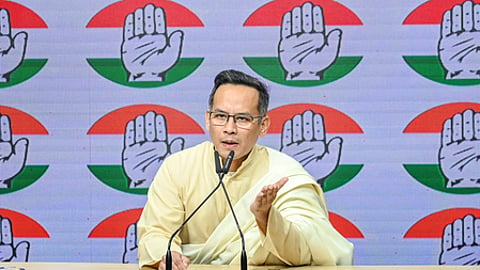

GUWAHATI: The coming together of the “3 Gogois” had gained a lot of traction in Assam’s public sphere this election, but it failed to prevent the inevitable.
Assam Congress president Gaurav Gogoi, Raijor Dal president Akhil Gogoi, and Assam Jatiya Parishad (AJP) president Lurinjyoti Gogoi, who all belong to the Ahom community, united ahead of the polls, with their sights particularly set on Upper Assam.
Upper Assam, when combined with Dhemaji, Lakhimpur and Biswanath districts of northern Assam, has 36 of the state’s 126 Assembly constituencies. The Congress-led six-party opposition front had banked heavily on the region, considering its large Ahom population.
However, not just the Ahoms, but even non-Ahom voters rejected these opposition parties. They could win barely two seats in the region — one by Raijor Dal and another by Congress. Akhil managed to retain his Sivasagar seat, but Gaurav and Lurinjyoti lost from Jorhat and Khowang seats respectively.
Ahead of the elections, Upper Assam witnessed separate mega rallies organised by communities, including the Ahoms, demanding Scheduled Tribe (ST) status.
Realising that the demand might affect the BJP’s poll prospects, the state government constituted a group of ministers (GoM) to look into the issue. The GoM, in due course, recommended ST status for six communities, including the Ahoms. The matter is now with the central government.
The recommendation eased visible anger, not just among the Ahoms but also among the five other communities, including the Tea Tribes, which have a sizeable number of voters in Upper Assam.
Raijor Dal and AJP are nascent political parties born out of the anti-Citizenship (Amendment) Act agitation. When they went to the polls, they had just one MLA in Akhil. Both lack not only leaders but also a grassroots base. Therefore, the poor performance in the elections is not surprising.
As for the Congress, critics say that Gaurav is not accessible. One of the main reasons behind his defeat is believed to be his detachment from the public. He allegedly spent very little time in Jorhat in the past two years since his election to the Lok Sabha from this parliamentary constituency.
