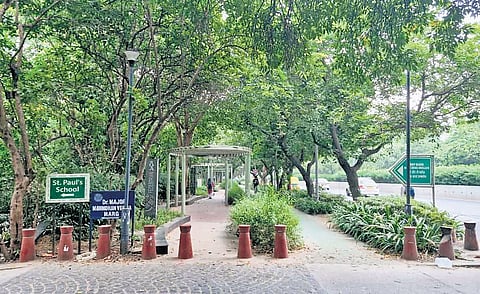

NEW DELHI: Months after the Delhi government discontinued its ambitious streetscaping project in April 2025, both residents and urban experts are calling for its revival. While acknowledging its design flaws, many argue that the initiative created rare, people-friendly spaces in the city and should have been improved rather than shelved.
“For the first time, some of our roads actually felt like places to walk and sit. We could meet friends, grab a tea, and not worry too much about traffic. It was lively and safe in the evenings,” said Ritu Sharma, a resident of Hauz Khas, recalling how the street near her house was completely transformed.
In South Delhi’s Lodhi Garden stretch, members of various book clubs often used the redeveloped areas as informal gathering spots.
“It was nice to just sit on the benches and discuss books. The greenery and lighting made the place feel modern. Honestly, Delhi needs more such spaces,” said Abhishek Kumar.
But residents also pointed to shortcomings. “There were stretches where the bike lanes were useless because of bad bollard placement. Sometimes even walking on the new pavements was confusing, with signboards missing or unclear,” said Ashok Mehta, a resident of Moti Bagh.
Urban planner and Raahgiri Foundation founder Sarika Panda Bhatt echoed these concerns, saying the project prioritised beautification over usability.

“I was so excited when the streetscape project was initiated but quite disappointed when the sample stretches were opened. The design had several problems. Except for a few stretches, it was not universally accessible. Cyclists in particular had difficulty accessing the dedicated bike lanes. Bollards were also badly placed. Even pedestrians had difficulty navigating them. It also had very few clear signs. The focus was on beautification, not mobility and usability of the road, as these are public spaces. As a result, it was also too expensive.”
Still, Bhatt argued the government erred in scrapping the project altogether. “The new government should not have scrapped this project but improved it with design interventions. Most importantly, it should be carried out in places like Madanpur Khadar and not Lodhi Garden.
Dense places with enough foot traffic. It should be in front of government schools, as students there mostly walk to school in large numbers.” With the initiative now shelved, residents say Delhi risks losing the momentum to reimagine its public spaces—spaces that, even briefly, made the capital more walkable and inviting.