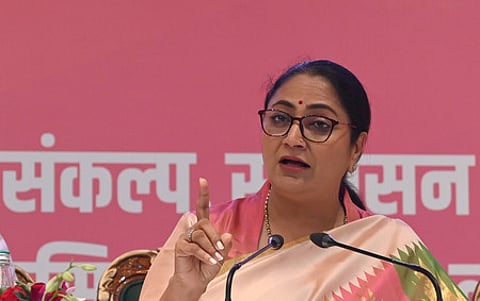

NEW DELHI: In a bid to speed up developmental works at the local level, Delhi CM Rekha Gupta has nominated 11 MLAs of the ruling BJP as chairpersons of as many district development committees (DDCs) in the city for FY 2026–27, as per an April 10 order by the General Administration Department.
The Chief Minister has appointed Gajender Drall as the chairperson of Outer North Revenue District, Surya Prakash for the North Revenue District, Kulwant Rana for North West Revenue District, Ashok Goel for Central Nortn Revenue District, Harish Khurana to chair the Central Revenue District panel, Pawan Sharma for West Revenue District and Parduymn Singh Rajput for the South West Revenue District. Further, Shikha Roy will helm the South Revenue District committee, Neeraj Basoya the South East Revenue District one, Anil Goel in East Revenue District and Jitender Mahajan the North East Revenue District.
The Delhi government has a two-tier structure for the decentralisation of decision-making regarding development works, including at the state and district levels.
The district committees are intended to provide a responsible administration by involving MLAs, municipal councillors, resident welfare associations, district magistrates and district level officers of the other departments and civic bodies.
Decentralised decision-making in matters relating to public utility and basic civic amenities involves people directly in the process of planning, execution and monitoring of various schemes, projects & policies as well as through their elected representatives.
It may be recalled that the Chief Minister had nominated eight BJP and three AAP legislators to these committees last year. The chairpersons in the last fiscal were Kulwant Rana, Ajay Mahawar, Gajendra Yadav, Pawan Sharma, Manoj Shokeen, Raj Kumar Bhatia, Shikha Roy and Jitender Mahajan, all from the ruling party. The three AAP MLAs nominated as chairpersons to DDCs were Sanjeev Jha, Ravi Kant and Ram Singh Netaji.
Two-tier structure for decentralisation of decisions
The Delhi government has a two-tier structure for the decentralisation of decision-making regarding development works. The district committees are intended to provide a responsible administration by involving MLAs, municipal councillors, resident welfare associations, district magistrates and district level officers.