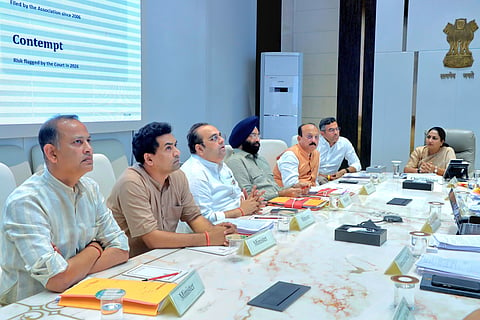

NEW DELHI: A day after the cabinet’s approval, the draft Delhi Ease of Doing Business Bill, 2026, was made public on Wednesday, proposing reforms to simplify setting up and running businesses in the capital. The proposed legislation introduces measures such as self-certification for low-risk industries, deemed approvals if authorities miss prescribed timelines, and a three-year exemption from routine inspections for newly registered enterprises.
According to the chief minister’s office, the proposed legislation seeks to make business approvals transparent, time-bound and technology-driven while reducing the compliance requirements for industries and investors.
Chief Minister Rekha Gupta said the objective was to ensure that entrepreneurs spend time expanding businesses rather than visiting government offices. “Our goal is to create a system where approvals are easier to obtain, procedures are clear, decisions are taken within fixed timelines and unnecessary compliance burdens are eliminated,” she said.
The bill has proposed a single window system, under which approvals, licences, no objection certificates, registrations and utility connections would be processed through a single online portal. Services such as building plan approvals, factory licences, fire clearances, water, sewer and electricity connections, RERA registrations and co-operative society registrations would be covered.
The Delhi State Industrial and Infrastructure Development Corporation (DSIIDC) will function as the nodal agency for coordinating with departments and civic agencies.
One of the major features is the provision for deemed approvals. If an authority fails to decide on an application within prescribed timeline, the approval will be treated as granted, enabling applicants to download it directly from the portal. The Bill also proposed self-certification for specified low-risk activities, including fire safety among others.
Newly registered enterprises would not face routine inspections for three years, except in cases involving serious complaints. The government said this would promote a trust-based regulatory framework. The draft legislation also introduces a negative list approach, allowing businesses to undertake any activity unless it is specifically prohibited.
Calling it a “historic shift” in the government’s approach towards businesses, Gupta said the proposed law would replace a system based on control with one founded on trust while retaining strict action against genuine violations.
