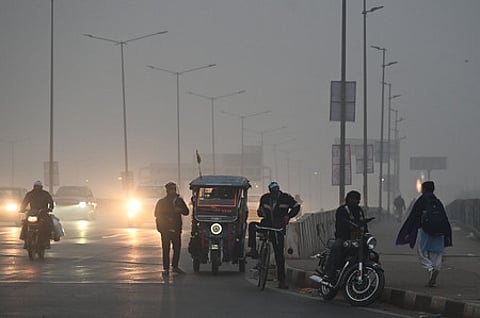

NEW DELHI: In a bid to address the national capital’s struggle with air pollution every winter, the Delhi government on Wednesday notified a permanent winter pollution control framework that will come into effect every year on November 1 and remain in force till February 28 of the following year.
This framework introduces a set of pre-defined measures to curb emissions from vehicles, construction activities and open waste burning. With this, the government is scrapping the practice of issuing separate orders every winter.
According to the Department of Environment and Forest, the framework has been designed to ensure timely implementation of pollution-control measures during the high-smog season. It also incorporates provisions of the revised Graded Response Action Plan (GRAP) issued by the Commission for Air Quality Management (CAQM) and directions of the Supreme Court.
Among the major measures, only vehicles with a valid pollution under control (PUC) certificate will be supplied fuel at petrol pumps, diesel stations, CNG outlets and LPG stations throughout the year. Compliance will be verified through electronic databases in addition to physical certificates.

From November 1 to January 31, non-BS VI vehicles registered outside Delhi will not be allowed to enter the city, with exemptions for CNG and electric vehicles, ambulances, emergency services and other notified categories. Parking charges at authorised parking facilities will also be doubled during the winter period to discourage the use of private vehicles, although parking at Delhi Metro Rail Corporation (DMRC) facilities will remain unchanged.
The framework will also introduce staggered office timings for government departments and mandating that only 50 per cent of employees in Delhi Government and private offices attend workplaces between November 1 and January 31, with the remaining staff working from home. Essential services, including healthcare, emergency services, public transport, electricity, water supply and sanitation, will be exempted from this.
To control dust pollution, demolition work and dust-generating construction activities will remain prohibited from November 1 to January 31, while only essential public infrastructure projects will be permitted during the stricter period between December 10 and January 20. Construction material-laden vehicles will also be barred from entering Delhi during this phase.
Chief Minister Rekha Gupta said the new system consolidates multiple existing orders into a single framework.