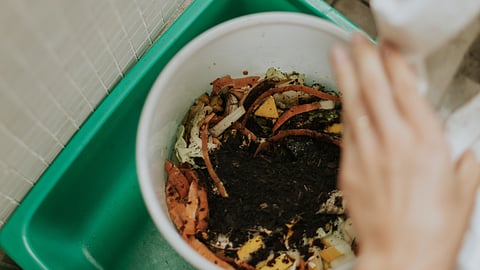

In most Indian homes, kitchen waste usually end up in garbage bins. Yet this everyday waste is actually one of the most valuable resources for gardeners. When converted into compost, kitchen waste becomes a powerful natural fertiliser. Composting is essentially nature’s recycling system.
Common compost materials include vegetable peels, fruit skins, tea leaves, coffee grounds, eggshells, and leftover cooked rice or bread in small quantities. For example, banana peels are rich in potassium, which supports flowering plants such as Hibiscus (Hibiscus rosa-sinensis), Roses (Rosa spp.), and Bougainvillea. Crushed eggshells provide calcium that strengthens plant cell walls and improves soil structure. However, avoid items like large amounts of meat, oily food, dairy products, or heavily processed foods.
Green waste includes kitchen scraps. They provide nitrogen, which helps microbes grow and multiply. Brown waste includes dry leaves, shredded paper, cardboard pieces, or sawdust. These provide carbon, which balances the decomposition process.
Composting doesn’t require large outdoor spaces. Terracotta compost bins, plastic composters, or stacked composting containers are widely available in gardening stores today.
Once compost is ready — usually after four to six weeks — it can be mixed into soil to improve plant growth. Balcony plants such as Money Plant (Epipremnum aureum), Areca Palm (Dypsis lutescens), and Spider Plant (Chlorophytum comosum) benefit greatly from compost as it improves soil fertility and water retention.
Flowering plants like Marigold (Tagetes), Petunia, and Geranium respond well to compost additions during their growing season.
Even edible plants grown in terrace gardens, such as Curry Leaf (Murraya koenigii), Mint (Mentha), and Chilli plants (Capsicum), thrive when compost is added regularly.
Beyond providing nutrients, compost improves the physical structure of soil. Urban soils, especially in potted plants, often become compacted over time. Compost helps loosen soil, allowing roots to grow more freely and improving drainage. In hotter climates, it also helps soil retain moisture, reducing the frequency of watering required during summer months. In humid cities, it supports microbial activity that keeps soil biologically active and healthy.
Studies suggest that nearly 50-60% of household waste in Indian cities is organic. By composting kitchen waste, homeowners can dramatically reduce the amount of garbage sent to municipal landfills.
Composting creates a cycle: food waste becomes fertiliser, fertiliser nourishes plants, and plants produce food and greenery that enrich our lives.
For homeowners with even a small balcony garden or a few potted plants, composting can transform waste into a valuable resource. Instead of discarding kitchen scraps, they become part of a natural loop that supports healthier soil and stronger plants.
