
NEW DELHI/RAIPUR: Delhi has been caught in a vicious cycle of trapped heat, losing its critical capacity to cool down at night and triggering severe health risks for over half its population, a new report by the Centre for Science and Environment (CSE) revealed on Tuesday.
On May 25, 2026, the capital recorded a night-time temperature of 32.4°C—its warmest night in 14 years.
According to the report, titled 'Making Delhi Heat-Resilient', the city's diurnal cooling (the temperature difference between day and night) shrank by 9 percent over the last decade. While a normal summer night used to drop by 12°C compared to the day, that relief has now dwindled to less than 10°C.
"Higher night-time temperatures take a heavy toll on human health," said Mitashi Singh, lead author of the report. "It prevents the body from recovering from daytime heat stress, leading to cardiovascular strain, disrupted sleep, and lasting physiological damage."
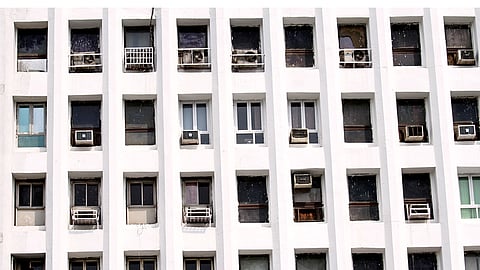
The crisis highlights a stark "cooling inequity." As wealthier residents retreat into air-conditioned spaces, Delhi’s peak power demand has soared to 8,231 MW. However, functioning ACs release trapped heat back into the atmosphere, worsening the urban heat island effect.
The CSE also blames Delhi's concrete density, shrinking green spaces, poor building insulation, and vehicle emissions for trapping daytime heat.
Construction workers, gig workers, street vendors, and slum residents make up roughly 50% of Delhi's population. For them, a sleepless, sweltering night directly translates to daytime exhaustion, heat sickness, and lost daily wages.
Despite this, current city heat action plans offer virtually no strategies to build resilience for these exposed communities.
Rajneesh Sareen, programme director, sustainable habitat, CSE, said, “The vulnerable communities are estimated to form at least 50 per cent of Delhi’s population. They do not have adequate means to adapt to the rising heat and are impacted more severely. They toil through the day to earn their daily bread – this becomes brutal when the nights do not provide any respite either. To add to this, if they fall sick – it means wage losses.”
To prevent the capital from becoming unliveable, the report urges a dual-strategy roadmap. It calls for city-wide overhauls, including mandating thermally efficient roofs, recognising heat as a notified disaster, and designing wind-ventilated layouts.
Crucially, for the outdoor workforce, it demands immediate protections: mandatory cooling breaks, staggered work hours, and dedicated financial and medical support during heat emergencies.
Higher night-time temperature can take a heavier toll on human health, Singh added.
