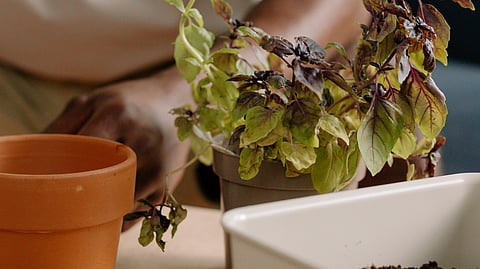

Plants may not speak, but they constantly communicate. Their leaves, stems, and growth patterns reveal whether they are comfortable, stressed, thirsty, or lacking nutrients. The ability to observe and interpret these signals is one of the most valuable skills in gardening and landscaping, especially in urban environments, where plants often grow in balconies, terraces, and landscaped courtyards.
This is one of the most common plant signals. Many people assume yellow leaves mean the plant is dying or needs fertiliser. However, the most common cause is actually overwatering. When soil remains constantly wet, roots are deprived of oxygen. This causes stress and leads to yellow leaves. Indoor plants such as Money Plant (Epipremnum aureum), Areca Palm (Dypsis lutescens), and Rubber Plant (Ficus elastica) frequently show yellow leaves when overwatered. In humid coastal cities, soil tends to stay moist longer due to higher humidity levels. This means watering frequency should often be reduced compared to drier climates.
Plants such as Dracaena marginata, Peace Lily (Spathiphyllum), and Spider Plant (Chlorophytum comosum) may develop brown tips when humidity is too low or when salts accumulate in the soil. In cities, where air conditioning and indoor environments can reduce humidity, tropical foliage plants sometimes struggle with dry air. Occasional misting or grouping plants together can help maintain a slightly more humid microenvironment.
This happens most commonly from lack of water. Plants lose internal water pressure when they are dehydrated, causing leaves to appear limp or wilted. Flowering plants such as Hibiscus (Hibiscus rosa-sinensis), Ixora coccinea, and Jasminum sambac (Mogra) often droop noticeably when they require watering. In hot weather conditions, particularly during summer, plants may require more frequent watering because evaporation rates increase. However, drooping can also occur due to overwatering, which damages roots and prevents them from absorbing water properly. Observe soil condition.
When plants lack essential nutrients, their leaves may become pale or lose their deep green colour. This condition, known as chlorosis, is commonly caused by deficiencies of nitrogen or iron. Plants such as Bougainvillea, Roses (Rosa spp.), and Marigold (Tagetes) may show pale leaves if the soil lacks nutrients. Regular addition of compost or vermicompost can help replenish nutrients in the soil.
These often indicate the presence of insects. Common garden pests include caterpillars, aphids, and mealybugs. Plants such as Hibiscus, Curry Leaf Plant (Murraya koenigii), and Chilli plants (Capsicum) frequently attract such pests. Natural pest control methods such as Neem oil spray are widely used in urban gardens.
Plants that receive insufficient sunlight often grow slowly or produce smaller leaves. For example, Bougainvillea, Jasmine, and Plumeria (Champa) require strong sunlight to flower properly. When placed in shaded balconies or dim corners, they may grow weakly without producing flowers. In apartments, observe the direction of sunlight. South-facing or west-facing balconies usually receive more sunlight compared to shaded north-facing spaces.
Experienced gardeners rarely rely on rigid schedules for watering or fertilising. Instead, they observe plants regularly and respond to the signals. A healthy plant usually has firm leaves, vibrant colour, and steady growth. When something changes it is often the plant’s way of indicating that its environment needs adjustment. Gardening ultimately becomes a practice of observation. The more time gardeners spend noticing subtle changes in their plants, the easier it becomes to understand what those plants need.
