
NEW DELHI: As Delhi’s heatwave continues to drive temperatures to extreme levels, security guards at the National Zoological Park are spending long hours outdoors under direct sunlight, often with limited opportunities for rest while monitoring visitors across the sprawling premises. The conditions have drawn attention to the challenges faced by frontline workers tasked with maintaining safety and order at the zoo.
There are also concerns about the workload being handled by the guards on duty. During a visit to the zoo, this writer could find only around 20 guards on the premises. Several sections of the zoo appeared unmonitored at different points. When asked, Savitri, a female security guard, said,
“The zoo employs approximately 110 to 115 guards in total, with 30 to 40 deployed during a single shift.” Earlier, the area surrounding the hippo enclosure appeared completely unmonitored despite regular visitor movement through the section. After the issue was brought to the attention of zoo authorities, two guards were stationed near the enclosure.
Most guards working at the zoo are employed on a contractual basis. Zoo director Dr Sanjit Kumar said guards earn approximately `800 to `850 per day. However, several guards disputed the figure, claiming their actual earnings amount to less than `650 per day despite working shifts lasting eight to nine hours. When asked about the relief arrangements for security personnel, Kumar said,
“Guards work eight-hour shifts with a 30-minute break and have access to green rooms equipped with fans and coolers.” He added that ORS packets and drinking water are provided to help workers cope with the heat. However, accounts from guards pointed to gaps between the facilities described by officials and the conditions experienced on the ground.
Jitendra, a security guard at the zoo, said ORS packets are distributed irregularly and estimated that guards receive them only once or twice a week during the summer months. Another guard, Arshad, said guards assigned to patrol different sections of the zoo are often unable to access lockers or green rooms during active duty because leaving designated areas unattended is difficult while monitoring visitors.
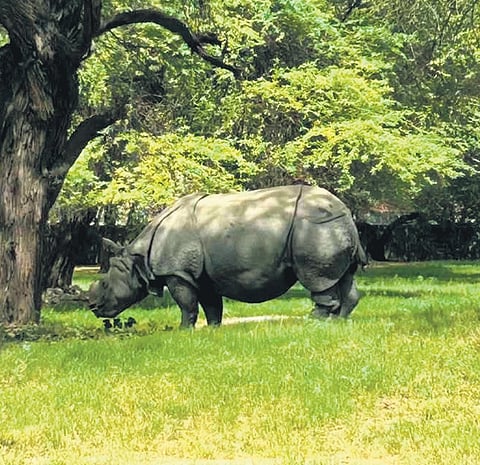
Meanwhile, from sprinklers and water ponds to misting systems and coolers, several cooling measures have been taken to help the zoo animals cope with the heat. The contrast in the level of arrangements for personnel and animals was stark.
