
Industry leaders on Monday hailed the Delhi government's new Electric Vehicle (EV) Policy 2.0, saying that if the national capital successfully transitions into a majority electric vehicle-driven city, it could become a benchmark for the rest of the country while helping tackle its chronic air pollution crisis.
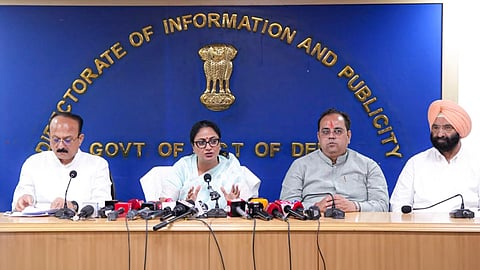
The Delhi Cabinet earlier in the day approved the new policy, which will come into effect from July 1 and aims to make the capital pollution-free by March 31, 2030. The government plans to invest around Rs 15,000 crore over the next four years to promote electric mobility and reduce vehicular pollution.
The policy provides full exemption from road tax and registration fees for all electric cars priced up to Rs 30 lakh (ex-showroom) registered in Delhi. It also mandates that only electric auto-rickshaws will be registered in the city from January 1, 2027, while registration of new petrol and CNG-powered two-wheelers will be phased out, with only electric two-wheelers to be registered from April 1, 2028.
Buyers of electric two-wheelers will receive a subsidy of Rs 30,000 in the first year, Rs 20,000 in the second year and Rs 10,000 in the third year.
Reacting to the announcement, Ather Energy co-founder and CEO Tarun Mehta described the policy as "one of the most significant city-level pushes for electrification in India".
"What stands out is not just the scale of the investment, but the way the policy has been designed. The combination of incentives, phased electrification mandates and charging infrastructure creates a very strong foundation," he said in a post on X.
More importantly, Mehta said, if Delhi could become a majority EV city, it would have the opportunity to become "a benchmark for the rest of the country".
Congratulating the Delhi government for taking a long-term view, he said such policies provide the entire EV ecosystem with the confidence to continue investing and building.
Tata Motors Passenger Vehicles also welcomed the policy, saying Delhi had once again demonstrated leadership by retaining ambitious electrification timelines for high-usage vehicle segments and focusing incentives exclusively on pure electric vehicles.
"By retaining ambitious electrification timelines for high-usage vehicle segments and focusing policy incentives on pure EVs, the government has reinforced the principle that public support should benefit and accelerate technologies that deliver the maximum environmental benefit with zero emissions," a company spokesperson said.
The policy provides long-term direction to the industry, strengthens confidence in India's EV ecosystem and could serve as a model for other states pursuing cleaner urban mobility, the spokesperson added.
Icra Ltd Vice President and Sector Head (Corporate Ratings) Rohan Kanwar Gupta said the proposed restrictions on new internal combustion engine (ICE) registrations for autos and two-wheelers are expected to materially accelerate EV adoption in Delhi while structurally dampening demand for ICE vehicles.
"The policy effectively necessitates a rapid portfolio realignment by OEMs toward electric offerings, with ICE-focused players exposed to potential volume contraction and underutilised capacities," he said.
While overall EV manufacturing capacity, particularly for two- and three-wheelers, has expanded sufficiently and is unlikely to constrain implementation, Gupta said the pace of transition would depend on ecosystem readiness, including charging infrastructure, financing availability and service networks.

Commenting on the exclusion of hybrid vehicles from the policy, he said it underscored a clear emphasis on zero-emission mobility.
"While this strengthens the long-term EV transition and reinforces investment clarity for EV-focused technologies, it also removes a transitional pathway for consumers, potentially posing near-term adoption challenges," he added.
Ultraviolette Automotive CEO and Head of Design Narayan Subramaniam said the policy's price-agnostic consumer support does not penalise buyers seeking better range, technology, performance or design, while its focus on charging infrastructure recognises energy as an integral part of the product.
"Clean technology is the way forward, and we at Ultraviolette are making that transition exciting," he said.
Gig workers welcome policy and seek safeguards for livelihoods
Welcoming the policy as a major step towards tackling air pollution, the Gig Workers Association (GigWA) urged the Delhi government to ensure that the transition to electric mobility does not come at the cost of workers' livelihoods.
The association said the shift should be "just and worker-centric", stressing that delivery personnel, gig workers, auto drivers and other informal workers who depend on two-wheelers for their daily income should not be forced to bear the financial burden of the transition.
"The government must ensure a smooth transition by providing interest-free loans, adequate subsidies, affordable charging and battery-swapping infrastructure, and social protection measures for workers," GigWA Organising Secretary Nitesh Kumar Das told PTI.
The association also demanded that existing vehicle owners be allowed to continue using their vehicles and that no worker should suffer wage or income losses because of the policy.
It further said platform companies that rely heavily on gig workers should share responsibility in helping them switch to electric vehicles.
"A cleaner future cannot be built at the cost of workers' livelihoods," Das said.
Earlier, Chief Minister Rekha Gupta said the policy places special emphasis on the transport sector and provides a roadmap for the phased transition from conventional fuel-powered vehicles to electric vehicles, while introducing incentives and measures to encourage wider EV adoption across different vehicle segments.
(With inputs from PTI)