
NEW DELHI: The night shelters run by the Delhi government, which aid the poor and homeless during extreme winter and peak summer months, are unprepared to handle the impending high temperatures, even though occasional showers have brought temporary relief.
The shelter homes this newspaper visited appeared ready to help residents, with individual cabins, beds placed side by side, coolers specially equipped for summer, and water filters. Even though the facilities appear fully functional at first glance, a deeper look into residents’ living conditions reveals several loopholes.
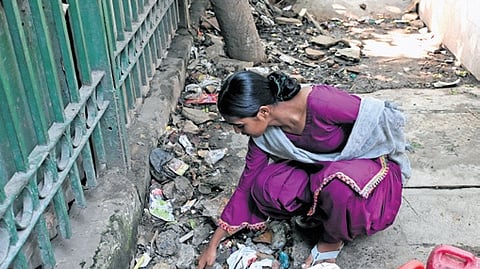
Sitting in one corner of the Sarai Kale Khan night shelter run by the Delhi Urban Shelter Improvement Board (DUSIB) is 18-year-old Nazmi. She is worried about the environment she lives in. She showed this reporter the unhygienic conditions in the washrooms and lavatories.
They are in this state because most taps do not function, she says. The saving grace, she adds, is access to drinking water, which becomes more than an essential commodity during peak summer.
Behind the washroom area, a water pipe peeked out from a small heap of waste. “We collect and store water from here in our buckets,” she says, adding the water supply resumes at 7 am dailyday, when they are expected to store enough water for the entire day.
There are five to six porta-cabins in the Sarai Kale Khan shelter, each of which has been provided with two air coolers. However, many of these coolers emit warm air because the motors meant to pump water into the cooler pads are dysfunctional most of the time, residents claim.

“One non-functional air cooler has been lying here unused for a long time. No one is repairing it. It is almost like a piece of scrap,” says 55-year-old daily wage worker Bappa, who has been staying at the shelter with his family for the last five years.
Another family living in the same shelter claims that the water dispensers installed in their cabin are never refilled. “The dispensers are there as showpieces,” says Shilpa, a 27-year-old mother of two toddlers. Her husband said,
“Last summer, the authorities provided us with four coolers, but this year, they have given us just two.” How is it possible for a cabin that accommodates around 60 to 70 people to get relief from the summer heat with just two coolers, he asked.
Broken coolers worsen shelter homes’ heat crisis
However, the government’s recent measures to tackle the heatwave have brought some optimism. The caretakers of each porta-cabin spoke about the supply of ORS packets for all residents.
“The NGO ensures a steady supply of ORS packets for people living here, so that they can cope with the extreme heatwave in the national capital,” says Akhilesh, who works on behalf of the SPYM NGO that runs the shelter at Sarai Kale Khan.
This reporter witnessed similar conditions at the Yamuna Bazaar shelter. Many daily wage labourers staying there were seen collecting ORS packets from the caretaker of their cabin. However, only one cooler was working in the cabin despite two being installed.
Pointing to the non-functional unit, resident Asif says, “These coolers were given to us a week or two ago, but one of them stopped working just a day after it was delivered.”
A recent assessment by the Centre for Holistic Development (CHD), a Delhi-based NGO, which covered 24 shelters across the city—including those in Sarai Kale Khan, Jama Masjid, Bangla Sahib, and Mori Gate—claimed that around 50 percent of cooling units, including fans and desert coolers, were non-functional.
However, a senior DUSIB official claimed that the report made “unverified claims” and that the situation was “not that dire”. Ground visits, though, show that these shelters have remained unchanged over the years, with the same problems persisting year after year.
Unsheltered in summer
Taps in shelter home washrooms either do not have water supply or are broken, leaving them in unhygienic state
Air coolers with non-functional motors to sprinkle water leave them unusable in high summer months in these homes