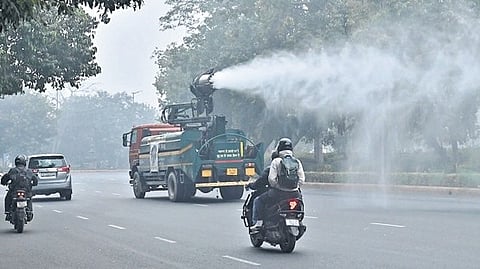

NEW DELHI: The Delhi Pollution Control Committee (DPCC) launched a road pollution control programme to increase monitoring and control of sources of dispersed air pollution across the city. It has deployed 13 dedicated field surveyors to survey roads daily, with a total coverage of nearly 18,000 kilometres of roads across MCD, PWD, NDMC, and Delhi Cantonment Board areas.
Surveyors will use the MCD-311 mobile app to log a minimum of 70 geo-tagged, photographic pollution issues per day per surveyor, with a citywide target of around 1,000 identified issues daily. The entire road network of Delhi will be comprehensively covered every month, with each surveyor assigned a minimum of 20 kilometres of roads to be covered daily.
Titled Road RADAR, or Real-time Air Pollution Detection across Roads, the DPCC programme is aimed at improving road cleanliness, reducing dust, and strengthening measurable air-quality outcomes in the city. The environment ministry said the new monitoring system includes built-in safeguards to ensure zero duplication of reported issues, so that every complaint corresponds to a unique and actionable pollution source.
Environment Minister Manjinder Singh Sirsa said the fight for clean air must be won on the ground, lane by lane and road by road. “Through Road RADAR,” he said, “the government is introducing a scientific system of daily surveillance, real-time reporting, and direct departmental accountability, so that pollution sources are not ignored, repeated, or allowed to linger.”
The programme will track 11 categories of air pollution issues: road dust, such as unpaved roads, broken footpaths, dividers, and potholes; sand or loose material piled on roadsides; unsurfaced and unregulated parking lots; garbage, including overflowing dhalaos and dumped roadside waste; biomass and garbage burning on roadsides; plastic burning on roadsides; construction and demolition waste dumped on roadsides; barren roadsides requiring greening; greening needs on central verges; dust from construction sites; and other dispersed sources of air pollution identified during field surveys.
The ministry said that a key feature of the system is that as soon as a pollution instance is logged by a surveyor on the application, it is automatically routed to the concerned authority for action, including the municipal corporation, Public Works Department, DDA and other Delhi and Central government agencies.
‘Must be won lane by lane’
Environment Minister Manjinder Singh Sirsa said the fight for clean air must be won on the ground, lane by lane and road by road. “Through Road RADAR,” he said, “the government is introducing a scientific system of daily surveillance”.
‘Responsive mechanism’
The ministry expects by combining geo-tagged evidence, daily field verification, and direct routing of issues to departments concerned, the programme will create a more responsive and accountable mechanism for pollution control.
