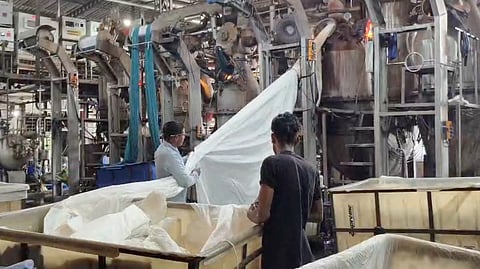

AHMEDABAD: Gujarat’s textile industry, especially in Surat, is facing a serious slowdown. Factories are reducing production, working fewer hours, and some are even shutting down part-time. Exports are falling, and there is also a shortage of workers.
Surat, known as Asia’s largest textile hub, is going through a major crisis. This started after a slowdown in the diamond industry and is now affecting textiles, which is the city’s main source of income.
To deal with low demand, textile groups have decided to cut production. Machines that used to run 24 hours a day now run only 12 hours. As a result, daily fabric production has dropped from about 6 crore metres to 3 crore metres.
Many powerloom factories are now working only 3–4 days a week. This helps reduce electricity costs and prevents unsold stock from piling up.
Industry leaders say this decision was taken together to avoid a crash in fabric prices. However, the slowdown is not just a strategy—it is also due to fewer orders and a shortage of workers.
A major problem is labour shortage. Around 1.5 to 2 lakh migrant workers who went home for Holi have not returned. Many fear another lockdown, similar to 2020, and prefer to stay in their hometowns.
Because factories are running fewer hours, workers are earning less—often about half their usual wages. With high living costs in Surat, many workers find it difficult to survive and are choosing to leave.
Rising prices of essentials and a shortage of LPG cylinders have made life even harder. For many workers, going back to farming in their villages feels more secure.
Global issues are also affecting the industry. Conflicts like the Russia-Ukraine war and tensions in West Asia have reduced export orders by 60–70%. At the same time, rising crude oil prices have increased the cost of raw materials like nylon and polyester by 20–25%.
This puts manufacturers in a tough position—they are facing higher costs but lower demand.
Textile groups have asked the government for help, including cheaper LPG for workers and relief on loans for small businesses.
Overall, Surat’s textile industry is facing a complex crisis caused by global problems, local shortages, and economic uncertainty. If demand does not improve and workers do not return, the situation may get worse.
