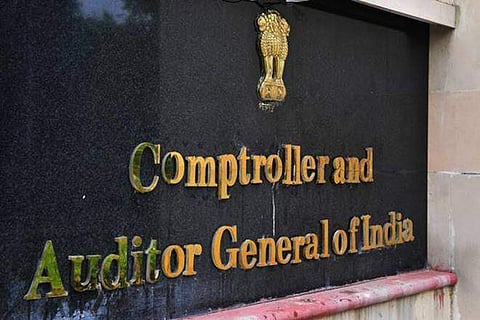

AHMEDABAD: A CAG report tabled in the Gujarat Assembly has exposed systemic gaps in GST enforcement, flagging Rs 2,606.62 crore in deviations, Rs 266.63 crore in unanswered mismatches, and a massive Rs 1,234.71 crore that auditors could not verify due to missing records.
The “Report of the Comptroller and Auditor General of India for the period ended March 2024” lays bare a troubling pattern that begins with sharp red flags in compliance, deepens into data inconsistencies, and culminates in a serious breakdown of audit accountability.
At the very outset, the audit zeroes in on structural lapses, observing clear deviations from provisions of the Act, Rules, and official instructions, particularly in critical processes such as cancellation of registration, revocation of cancellations, and delays in recovery of dues across 10 selected units.
As these procedural cracks widen, the system appears to falter, with the MIS-generated report on revocation applications throwing up discrepancies, raising questions about the reliability of backend monitoring mechanisms.
Building on this, the audit escalates its scrutiny, flagging as many as 738 inconsistencies among the top deviations. Even as these red flags mount, the response mechanism appears sluggish, as initial replies were not received in five key cases involving a significant Rs 266.63 crore mismatch, exposing a worrying gap between detection and departmental accountability.
As the analysis deepens, the scale of the issue becomes sharper and more quantifiable. The audit identifies deviations in 291 cases involving Rs 2,606.62 crore, accounting for 39.70% of the total inconsistencies where responses were furnished.
These are not minor clerical slips; the highest concentration of discrepancies emerges in core GST filings, mismatch in tax liability between GSTR-3B and E-Way Bills, inconsistencies between GSTR-01 and GSTR-09, and ITC mismatches between GSTR-2A and GSTR-3B, areas that form the backbone of tax compliance.
However, the narrative does not remain one-sided. Of the responses examined, 340 cases were accepted by the audit, indicating partial reconciliation.
Within this subset, 45 cases amounting to 13.24% were attributed to taxpayer data entry errors, while the department demonstrated proactive corrective action in 87 cases. Yet, these corrective notes fail to offset the broader systemic concerns that continue to loom large.
The most critical breakdown emerges where the audit process itself hits a wall. Seeking deeper verification, auditors requested granular financial records, including statements, ledgers, invoices, audit reports, and debit-credit notes for 65 sampled taxpayers. In a glaring compliance failure, the department failed to produce records in 63 of these 65 cases.
The consequence is stark: mismatches and deviations worth Rs 1,234.71 crore could not be examined at all, effectively placing a substantial volume of financial irregularities beyond the scope of audit verification.
Step by step, the report constructs a narrative that moves from procedural deviations to data inconsistencies, and ultimately to institutional opacity, turning what begins as an audit observation into a larger question of enforcement credibility and systemic transparency.
