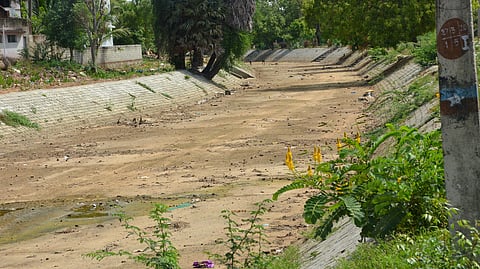

AHMEDABAD: With the closure of key canals of the Ukai-Kakrapar irrigation project for renovation, farmers across South Gujarat, including Surat, face a looming water crisis, threatening irrigation across nearly two lakh hectares of agricultural land.
As the Right Bank Canal is scheduled to remain shut for 90 days and the Left Bank Canal for 30 to 35 days, farmer leaders have urged the state government to increase daily electricity supply for agricultural connections from eight to 12 hours to help farmers sustain their standing crops through borewells and tubewells.
The proposed canal shutdown has raised concerns among farmers who depend heavily on the Ukai-Kakrapar irrigation network, considered the agricultural lifeline of South Gujarat. With canal water unavailable for an extended period, thousands of farmers will have to rely almost entirely on groundwater sources to meet their irrigation requirements.
However, the existing eight-hour electricity supply for agricultural purposes is proving inadequate to irrigate such a vast farming area, particularly when multiple crops require water at critical stages of growth.
Farmer leaders argue that an additional four hours of uninterrupted power supply would allow farmers to operate their irrigation pumps for longer periods and reduce the risk of crop damage.
The timing of the canal closure has added to farmers' anxiety. Sugarcane, one of the region's major cash crops, is already standing in fields, while wheat has been sown as a winter crop.
Besides, substantial areas are under paddy, fruit and vegetable cultivation, all of which require regular irrigation to maintain crop growth and productivity.
With the Right Bank Canal remaining closed for three months, farmers fear that inadequate water availability could affect crop yields and translate into substantial financial losses. The situation is particularly concerning for those who do not have reliable access to alternative water sources and must depend on electricity-driven borewells and tubewells.
Against this backdrop, farmer leader Jayesh Delad, along with other agricultural representatives, has submitted a written representation to the Chief Minister and the Energy Minister, seeking an increase in agricultural power supply to 12 hours daily until normal canal water distribution is restored.
Explaining the urgency of the demand, Delad said the Ukai-Kakrapar irrigation supports agricultural activities across a large part of South Gujarat and that its prolonged disruption could place farmers under severe pressure.
"The Ukai-Kakrapar irrigation scheme is the lifeline of the entire South Gujarat region. With the Kakrapar Right Bank Canal scheduled to remain closed for 90 days and the Left Bank Canal for 30 to 35 days for renovation work, irrigation across approximately two lakh hectares will be affected. Farmers cannot afford to leave their standing crops without adequate water during this period," Delad said.
He further pointed out that sugarcane, wheat, fruits and vegetables require timely irrigation and that farmers would have little choice but to depend on tubewells and borewells while canal water remains unavailable.
"At present, farmers receive only eight hours of electricity for agricultural irrigation. This duration is not sufficient when the entire burden of irrigation shifts to groundwater sources. We have therefore requested the government to increase the supply to 12 hours daily. An additional four hours would enable farmers to operate their pumps for longer and provide the necessary water to their crops," he said.
Farmer leaders have urged the government to consider the demand as a temporary relief measure for the entire canal closure period. They maintain that extending agricultural power supply would help protect standing crops, safeguard farmers' investments and prevent a disruption in agricultural production across South Gujarat.
The government's response to the representation will be crucial for farmers as the canal renovation work threatens to turn the coming months into a challenging period for the region's agricultural economy.
