
AHMEDABAD: Gujarat’s power demand has reached an unprecedented high, putting the state’s energy infrastructure under mounting pressure and forcing the government to fast-track short-term arrangements and long-term capacity expansion.
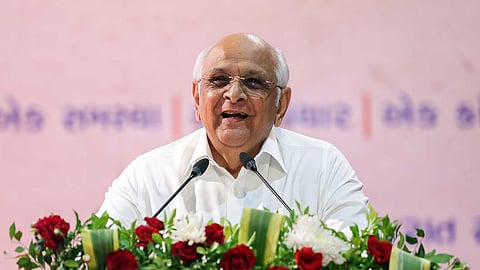
At a high-level meeting at his residence, Chief Minister Bhupendra Patel reviewed the demand-supply situation and directed the Energy Department to expedite measures to ensure uninterrupted electricity for farmers, industries and households.
The scale of the challenge is stark. On October 16, Gujarat recorded peak electricity demand of 29,822 MW, up 36.6% from 21,822 MW in October last year. Daily consumption climbed to 574 million units from 457 million units, marking an increase of nearly 27%. Moreover, demand during September and October has risen by around 4,000 MW, or 12%, compared with previous years.
Several factors have converged to drive the surge. Weak monsoon conditions and the impact of El Niño have kept temperatures elevated, pushing up air-conditioning and cooling loads. Simultaneously, the government’s effort to provide adequate irrigation power to protect standing crops has driven agricultural demand to a daily peak of 12,000 MW. Industrial consumption has also gathered pace ahead of Diwali.
Evening hours pose the biggest challenge. Between 5 pm and 11 pm, solar generation falls to zero after sunset, while wind output remains unpredictable. Consequently, coal- and gas-based plants are being deployed to meet demand, while the State Load Dispatch Centre and distribution companies work round-the-clock to maintain grid stability.
Lower hydropower output, owing to deficient rainfall in Gujarat and neighbouring states, and declining wind generation have further tightened supply.
To shore up availability, the state has sought central intervention. The Union Coal Ministry has assured 10-11 railway rakes daily for coal supplies until November, rising to 13-14 rakes thereafter.
Gujarat has also secured 329 MW from NTPC’s Farakka plant for November, 551 MW from Assam’s central power quota on a long-term basis, and a one-year extension of its existing 716 MW supply arrangement from NTPC’s Barh-I and Dadri-I plants, now valid until March 2028. Another 500 MW has been sought from the Centre’s unallocated quota.
Meanwhile, the government is betting on battery storage to reduce evening shortages. Against 192 MW of operational Battery Energy Storage System capacity, agreements have been finalised for 2,742 MW/5,517 MWh. A 500 MW/1,000 MWh project is expected by March 2027, while a 1,000 MW/4,000 MWh project is under tender.
Long-term plans include more than 1,300 MW of central thermal power and 1,200 MW of central hydropower from 2028-29 onwards. Gujarat has sought an additional 5,000 MW or more for requirements projected for 2031-32. A 4,000 MW tender under the SHAKTI scheme, a proposed 4,200 MW nuclear project and an 800 MW Ukai thermal unit are also in the pipeline.
Patel directed officials to accelerate implementation, underscoring the urgency of securing reliable power as demand continues to climb.
