
If the CMC finds a shortfall in the release of Cauvery water by Karnataka and orders it to release more water to Tamil Nadu, the state could face a severe drinking water shortage.
The Supreme Court on Friday asked the Cauvery Monitoring Committee to meet in a week to see if Karnataka had to make good any shortfall in its release.
Bangalore Water Supply and Sewerage Board (BWSSB) Engineer-in-Chief T Venkatraju says Bangalore alone needs around 1.5 tmc ft of water every month. Therefore, the city will need at least 7.5 tmc ft till the beginning of June, when the monsoon normally arrives.
Apart from a small quantity of ground water, Bangalore gets all its drinking water from the Cauvery.
The BWSSB draws water from the Kabini and Krishnarajasagar (KRS) reservoirs. The Kabini reservoir also caters to T Narsipur, Chamarajnagar and Kollegal, besides supplying some water to Mysore. KRS has to meet the drinking water needs of Mysore, Mandya and other cities, which require 3-4 tmc ft.
Venkatraju said, “We have requested the government to release 1.5 tmc ft to Bangalore every month and the government has agreed to do so. Considering the water levels in the reservoirs in the Cauvery basin, we might have to ration water supply to maintain a buffer stock if the monsoon is delayed.”
According to water management engineers, the Kabini reservoir has only 3 tmc ft of usable storage and KRS just 7.5 tmc ft.
The usable storage in the Hemavathi reservoir is just 3 tmc ft. Hassan, Arakalgud, Holenarsipur and K R Nagar need more than 2 tmc ft of drinking water from here.
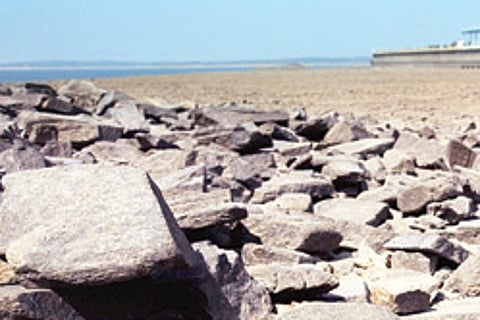
In all, only 13.5 tmc ft of water is available for drinking in the three reservoirs. With virtually no inflow into any of them, this is barely enough to meet the needs of the cities in the region.
Engineers face the task of managing the flows between the reservoirs and to the cities.
Water Resources Department Principal Secretary D Sathyamurthy said, “This year we have decided not to release water for irrigation. Water in the reservoirs would be sufficient to meet only the drinking water needs.”
