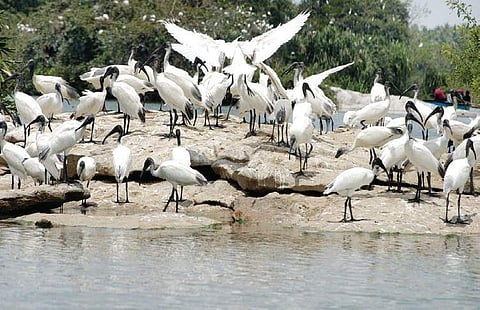

MYSURU: Consecutive droughts, erratic monsoons and the trickling flow of water from Krishnaraja Sagar (KRS) dam have had an adverse impact on avian life at the famed Ranganathittu bird sanctuary near the city.
While there has been a 30 per cent dip in the bird population, nesting and breeding of migratory birds too has been affected. It has also left thousands of visitors disappointed.
Spread over 61 sqkm, Ranganathittu bird sanctuary is a haven for migratory birds and a traditional nesting colony. It has recorded 221 species of birds from 61 families which include migratory birds from across the country and also from as far as Siberia. Migratory birds arrive from December to nest and breed till mid-July.
The bird population was more or less the same during 2015-16 as nearby lakes and tanks were full and vast areas were under paddy cultivation. However, this year, with water bodies drying up and Cauvery river water at an all-time low, migratory birds have left a month ahead due to scarcity of food, point out bird watchers.
Mysore Amateur Naturalist (MAN) founder Manu said a majority of the birds depend on wet paddy fields where they feed on invertebrates. The dry spell has hit animal species on which birds like white ibis, egrets and others depend on.
No. of visiting photographers dropped
Cormorants feed on small fish in water bodies while painted storks and pelicans prey on big fish, he pointed out. Manu said many of the birds have abandoned breeding this time as they could not find food. However, he felt that a normal monsoon this year could bring the sanctuary back to its glory.
Vinodh, a bird watcher and amateur photographer from Bengaluru, concurred that there is a drastic fall in the bird population this season. The Gandehosahalli bird sanctuary too has been affected as the water running downstream of KRS has reduced.
The saving grace, however, is the thick pelican population in the five islands. Bird watchers say pelicans have arrived in good numbers as catching fish has become easy in the receding waters of Cauvery river.
A forest officer said the number of professional photographers visiting the sanctuary too has dropped. On earlier occasions, breeding at Ranganathittu was badly hit due to floods and then came the outbreak of swine flu, due to which they were closely monitoring the bird population. Now, the winged visitors are threatened by the drought condition, he added.
Veteran boatman Govind said the sanctuary had not witnessed such a pathetic situation in the past. “What can we do if there are no rains?” asked Lokesh, another boatman.
The Forest staff and boatmen who have knowledge of birds and their behaviour, monitor the movement of birds at the sanctuary and also in nearby agricultural fields, tanks and water bodies.
The boatmen take visitors around the sanctuary and explain about the flora and fauna, and bird species that visit the sanctuary.
