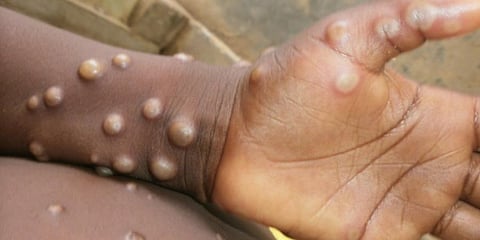

BENGALURU: After Covid-19, the fear of monkeypox is now on the rise. Though this is a self-limiting disease in most people, the symptoms can last from two to four weeks.
Dr Giridhar R Babu, Professor, Head — Lifecourse Epidemiology, Indian Institute of Public Health, explains to The New Sunday Express that severe cases are in a minor proportion and the case fatality ratio is around 3-6 per cent.
He also says the government is working on preparing a testing kit for detection.
How serious is the monkeypox?
There could be severe cases in a minor proportion, and the case fatality ratio is around 3-6%. The degree of severity depends on the extent of virus exposure and the health status of the person. People with immuno-compromised diseases are likely to be at a higher risk of infection and may have complications. Children, pregnant or breastfeeding women and persons with one or more complications too could be at risk.

Do you feel cases are being under-reported because people mistake it to be chickenpox?
Though there are rashes in chickenpox and measles, the pattern of onset and distribution are distinct and different for these three diseases.
Skin rash on any part of your body (even if it is only 1 or 2 spots) may be the only symptom. Other symptoms are fever, chills, headache, muscle aches and backaches.
Another distinguishing feature is swollen lymph nodes, much earlier during the prodromal phase.
The symptoms usually appear 5–21 days after exposure. People should be alert and report symptoms like swollen lymph nodes, sores in the mouth, rash, and eye irritation or redness.
There could be small lesions in the beginning; in the mouth or over the skin. A rash begins as a macule, papule, or vesicle, then progresses to a pustule, and forms a crust. Lesions are often seen in one stage of development and are very slow. The rashes will be denser on the face, palms, and soles.
How prepared is the govt with testing kits for monkeypox?
Currently, there is no testing kit validated by ICMR or approved by the drug controller in India. It will take a week or so to get the validation done for testing kits.
Therefore, relying on tests advertised by diagnostic centres is not advisable. Given the expertise and experience of how India managed to scale up the testing, I am confident that we can manage validation, permissions, and scale up efficiently.
What should the government be doing to prevent monkeypox from coming into the country in a big way?
The Central and State governments should take several measures. These include issuing guidelines for managing monkeypox by the Ministry of Health and Family Welfare.
The Centre has invited vaccine-makers to develop a vaccine for monkeypox. It has also gone ahead with the process of validation for manufacturers to develop diagnostic kits.
It is worrying that for overburdened health systems, a chain of attacks of pandemics can lead to the destruction of the system.
Breaking the chain at a very early stage can reduce many infections and is more cost and time effective than starting work once it spreads to many people.
At this very early stage, health systems and governments should take strict action regarding mobility, isolation, and quarantine, which could not be followed promptly in the initial stages of Covid. This will prevent the virus from spreading to the masses.
At a wider level, countries should constantly be alert for signals related to the disease. Proactive measures related to prevention, detection, and reporting are required.
What precautions should people take to prevent infection?
Persons with monkeypox that include its accidental implantation in eyes, mouth, or other anatomical areas might constitute a special hazard.
Information and awareness around the outbreaks should be constructively used to engage and empower high-risk communities and reduce stigma and discrimination.
The challenge is to eliminate misinformation and disinformation wherein the public, social media companies, and civil society organisations must collaborate and work with the government.
There were reports that the monkeypox virus is a variant or a derivative of the smallpox virus. What are the vaccines for it?
Among vaccines, JYNNEOS is a live vaccine produced from the strain Modified Vaccinia Ankara-Bavarian Nordic, an attenuated, non-replicating orthopoxvirus. This is also known as IMVAMUNE, IMVANEX, MVA. This is indicated for prevention of monkeypox disease in those 18 and above who are at higher risk for smallpox or monkeypox infection.
The other vaccine is ACAM2000, a live vaccinia virus vaccine that FDA licensed in August 2007 and is meant for active immunisation against smallpox.
As per the emergency authorisation of the CDC in the US, this is useful against monkeypox during an outbreak.
Another agent, tecovirimat, is also available for treatment; an antiviral medication indicated for smallpox disease is found useful in adults and paediatric patients weighing at least 3 kg.
Pre-Exposure Prophylaxis is a vaccination for select persons at risk for occupational exposure to monkeypox, including personnel in research or clinical laboratory and health care team members at risk for occupational exposure to orthopoxviruses.