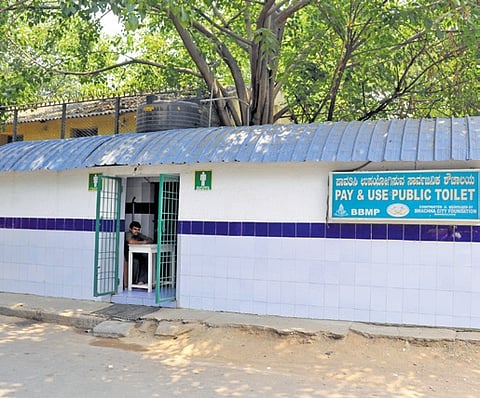

BENGALURU: A recent study has revealed critical gaps in the city’s public sanitation infrastructure, and highlighted alarming issues related to accessibility, inclusivity and hygiene.
Conducted by RV University’s Centre for Disability Justice and Inclusion (CDJI) and Centre for Gender Studies (CGS), the study, titled -- Flushed Out: Unravelling the Labyrinth of Public Toilets in Bengaluru - A Tale of Access, Equity, and Quality -- noted Bengaluru’s rapid population growth, which is currently at 2.94% annually, and stressed the urgent need for adequate public facilities, particularly among vulnerable groups like street vendors and gig workers, who heavily rely on public amenities.
The study, which examined 65 public toilets across various areas, pointed out that while the city has 803 public toilets, key tourist destinations like Cubbon Park and Ulsoor Lake lack these essential facilities outside the premises. It also found that toilets are primarily clustered around commercial hubs such as Commercial Street and Chickpete.
The study, conducted over a one-month period, surveyed public toilets in a variety of public spaces, including parks, Metro stations, bus stops and marketplaces.
In areas where toilets were provided, they were often difficult to locate. For example, despite the presence of five toilets in Lal Bagh, none were indicated on the entrance maps, forcing visitors to search for as long as 19 minutes to find one, the study stated.
Moreover, out of the 65 toilets surveyed, 52 were neither marked on maps nor had any visible directions to guide the public. The absence of universal symbols and adequate arrows further complicates the situation, particularly for women, the elderly, and disabled individuals who may be uncomfortable asking for directions.
The study also identified that many public toilets were poorly lit or lacked proper locking mechanisms. Inclusivity was another major issue, with only two toilets providing sanitary products, which were only available upon special request from male staff members who would bring them from nearby pharmacies.
The study also found that only 18% of the toilets had dustbins within stalls, leading to improper disposal of waste and blockages in many facilities. Sanitary pad disposal units were rare, and hand-washing facilities were available in only 30% of the toilets.
