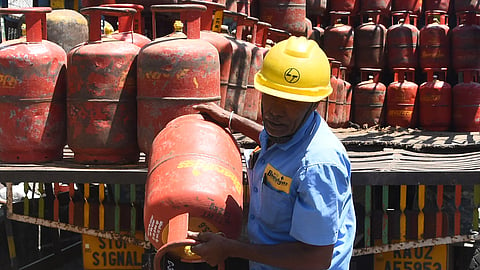

BENGALURU: The impact of the West Asia conflict is now visible on Karnataka’s transport economy with direct impact on the availability of auto LPG to the indirect impact of the war on the taxi services from the airport.
Autorickshaws, a vital component of the mobility network, rely heavily on LPG. With supply disruptions triggered by shipping delays near key global routes, availability has tightened. Industry voices warn that while petrol and diesel remain stable for now, LPG shortages have already strained daily operations.
Autorickshaws were the first to feel the impact. The situation has eased but a few private outlets have shut.
This crisis has coincided with another major disruption – the sharp decline in international flight traffic. According to Radha Krishna Holla of Karnataka State Travel Operators Association (KSTOA), Karnataka typically receives over 30 daily flights from West Asian hubs such as Dubai, Abu Dhabi, and Muscat, landing in Bengaluru and Mangaluru. Many of these routes, however, especially high-frequency services from Dubai, have been reduced or suspended.
He pointed to the cascading impact: “There is more than a 50% drop in international passengers. These travellers are usually high spenders, and their absence has hit tourism, hotels and transport services directly.” The timing has worsened the blow, as the disruption coincides with the peak summer travel season, when inbound travel to South India is typically high.
For transport operators – particularly those in the luxury and tourism segments, the consequences have been severe. “For nearly 40 days, business has been close to zero,” Holla said, highlighting how reduced passenger movement has translated into idle fleets and stalled revenues. Even short-duration travel has declined, as flights have become limited or prohibitively expensive.
The crisis has also exposed structural vulnerabilities within the sector. Much of Karnataka’s transport ecosystem operates within the unorganised space, making it less visible in policy responses. “When large corporations are hit, it reflects in markets. But when small operators suffer, it goes unnoticed,” Holla observed.
In response, industry stakeholders have appealed to the Union Government for relief measures, including loan moratoriums, tax deadline extensions, and interest-free credit support to sustain operations. Simultaneously, operators are exploring alternatives such as CNG through vehicle retrofitting. However, inadequate infrastructure and long queues at refuelling stations have limited its effectiveness.
Despite the challenges, there is cautious optimism. Fuel supplies for essential sectors remain stable, and stakeholders believe that a geopolitical resolution could quickly restore normalcy. “Peace and ceasefire are essential,” Holla stressed, underlining the direct link between global stability and local livelihoods.
Karnataka Transport Minister Ramalinga Reddy said, “We depend largely on imports for diesel and petrol. Supplies from countries like Russia are continuing, but global developments and policy decisions abroad could influence availability.”
At present, there is no immediate shortage of diesel, which is the primary fuel for most segments of the transport sector, including buses and goods vehicles. “As of now, there is no issue with diesel supply. Operations are continuing as usual,” he said, adding that we cannot predict how things will evolve if the situation continues for a longer period.
