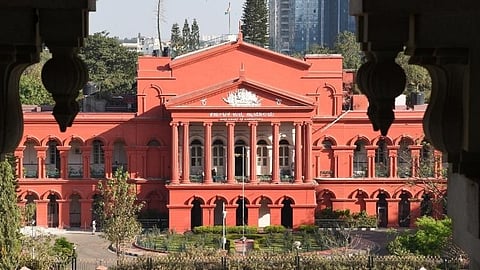

BENGALURU: The High Court of Karnataka has stayed the operation of Regulations 6 (2) (b) and 8 (4) of the Central Electricity Regulatory Commission (CERC) (Deviation Settlement Mechanism and Related Matters[DSM]) Regulations, 2024, which sought to alter the formula for computation of deviation and imposed stringent deviation bands and enhanced penalties with effect from April 1, 2026.
Justice KS Hemalekha passed the interim on April 27, staying the operation of the amendment concerning the petitioners who have challenged the same. The court also issued a notice to the CERC, India Meteorological Department, National Centre for Medium Range Weather Forecasting and Grid Controller of India.
The court noted that the petitioners are willing to continue under the earlier DSM regime and comply with the existing deviation norms. The operation of Regulations 6 (2) (b) and 8 (4) of the DSM Regulations, 2024 shall not be enforced against the petitioners to the extent of the revised formula and enhanced penalties, till the next date of hearing. The petitioners shall continue under the earlier DSM regime, deviations up to 15% shall be governed in terms of the earlier framework and the petitioners shall pay deviation charges accordingly, the court added.
The petitioners were the National Solar Energy Federation of India, Renew Wind Energy (TN2), Sembcorp Green Infra, Yarrow Infrastructure, JSW Neo Energy, Spring Solar India and Indigird. The petitioners have contended that the DSM framework regulates deviation from scheduled generation and imposes financial consequences to maintain grid discipline.
They said renewable energy generation (solar/wind) is inherently weather-dependent and uncontrollable, unlike conventional sources.
Senior Counsel appearing for the petitioners contended that the impugned Regulations 6 (2) (b) and 8 (4) have been notified without compliance with mandatory prior publication under Section 178 (3) of the Electricity Act, 2003.
It was alleged that the draft notification did not contain the revised deviation formula as ultimately notified, and therefore, stakeholders were denied a meaningful opportunity to object to the substantive change. In support of this contention, petitioners have cited a verdict of the apex court which held that the objections and suggestions received pursuant to a draft notification are required to be duly considered, give an opportunity of hearing to the affected parties, before taking a decision to publish the Rules in the official gazette and that such process is not a mere formality. But it was not done, which rendered the impugned provision arbitrary and violative of principles of natural justice, the petitioners argued.
