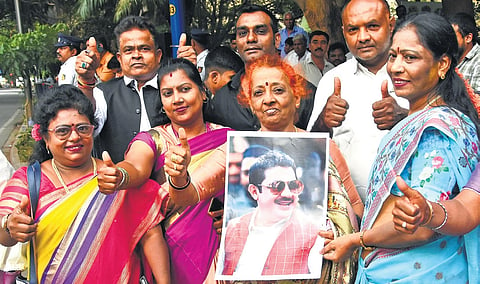

BENGALURU: The return of BZ Zameer Ahmed Khan to the Karnataka cabinet has emerged as the defining political story of Chief Minister DK Shivakumar’s cabinet expansion on Monday, and a pointer to the Congress high command’s attempt to balance discipline, caste equations and competing power centres within the state unit.
Khan, five-time Chamrajpet MLA and former Housing and Waqf Minister, was among the most debated names in the weeks-long cabinet exercise. His reinstatement came despite his earlier removal from the ministry after an audio recording allegedly showed him working against Congress candidate Samarth Shamanur during the Davanagere by-election. The episode was viewed as a serious breach of party discipline.
Following the controversy, sources said Khan had apologised to both the Karnataka leadership and All India Congress Committee (AICC). He was summoned to New Delhi by AICC general secretaries Randeep Singh Surjewala and KC Venugopal as the party deliberated over whether he should be reinducted into the ministry. His return gathered momentum after some Congress leaders publicly described him as a “capable leader” whose induction would strengthen minority representation in the cabinet.
Developments in Davanagere illustrate the extent of local political influence on cabinet choice. Bhatkal-Honnavara MLA and former minister Mankal Vaidya, a prominent OBC Mogaveera leader from coastal Karnataka, was reportedly included in an initial draft list before being dropped at the last moment.
The Congress later attributed his inclusion to a “typographical error”, an explanation that triggered widespread political speculation. Instead, Davanagere North MLA SS Mallikarjun was inducted after reportedly conveying his intention to resign if denied a ministerial berth. Mallikarjun is the son of late Congress stalwart Shamanur Shivashankarappa, while his wife, Prabha Mallikarjun, is a Member of Parliament and son Samarth Shamanur is Davanagere South MLA.
The Shamanur family has remained one of the most powerful political families in Davanagere for decades and also heads the Veerashaiva Lingayat Mahasabha, with considerable influence within the Lingayat community. Party sources said Vaidya was unable to secure meetings with either the CM or senior leadership after the change.
The contrasting trajectories of Khan and Vaidya mirror the Congress’ dilemma between organisational discipline and political expediency. While Khan’s eventual rehabilitation indicates the leadership ultimately chose accommodation over punishment, the reversal on Vaidya indicate that strong regional and community power centres continue to shape cabinet decisions.
