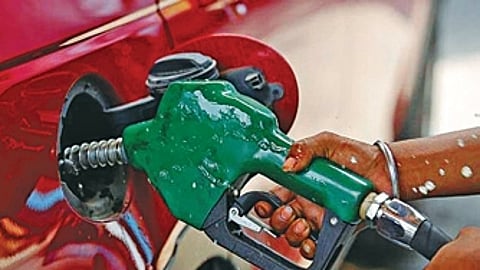

BENGALURU: The Union Government’s E20 fuel policy that mandates a blend of 20% ethanol and 80% petrol is coming under flak from motorists especially with the Centre telling the Supreme Court that ethanol blending programme is still in the experimental stage with final results expected only by 2027.
For example, Dr. Sagarika in Bengaluru has been having starting trouble with her Vespa scooter. She says three times she had to fall back on mechanics who drained nearly a bottle of water-like liquid from the petrol tank. “Every time the mechanic removes the liquid and the scooter starts functioning again,” says she.
Deepak, a mechanic, says the villain is E20 fuel. “Ethanol attracts moisture. If the fuel is not properly blended or stored, it separates and settles at the bottom of the tank, creating starting trouble,” he claimed.
A Vicky, who has specialised in imported car repairs for nearly four decades, says ethanol is denser than petrol and settles at the bottom of the fuel tank when phase separation occurs. He said that this can result in engine complaints, carbon deposits, reduced fuel efficiency and loss of vehicle pick-up.
BR Ravindranath, former president, Karnataka Petroleum Dealers’ Association, said the issue is not with ethanol as a concept but with its implementation. “The biggest problem is blending. If the Centre has told the Supreme Court that further experiments are required until 2027, it means the programme is still being evaluated while millions of consumers are already using the fuel.”
He said improper blending can lead consumers to mistake ethanol separation for water contamination. “Many motorists believe petrol has been mixed with water. In several cases, what they are actually seeing could be ethanol separating from petrol. This needs scientific study before being imposed on the public,” he said.
He added that ethanol has a lower calorific value than petrol, potentially affecting fuel economy, and claimed he had repeatedly raised concerns with oil marketing companies and fuel terminal managers over blending practices without receiving satisfactory action.
Meanwhile, in a post on social media, Karnataka Home Minister Priyank Kharge asked the Centre to roll back its E20 fuel policy.
