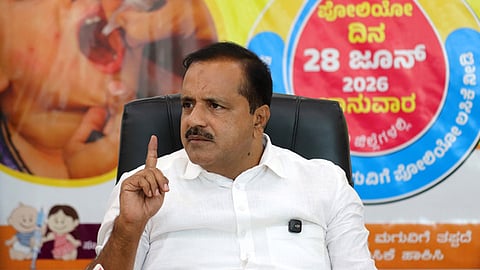

MANGALURU: Health and Family Welfare Minister UT Khader on Saturday said the sale of junk food would be banned in schools and hospitals amid growing health concerns linked to unhealthy eating habits.
Speaking to reporters after a review meeting at the District Wenlock Hospital in Mangaluru, Khader said a majority of lifestyle-related health issues stemmed from the consumption of junk food. "There should be a complete ban on junk food in school and hospital canteens. Let the process begin at District Wenlock Hospital so that it can serve as a model for other government and private hospitals to follow," Khader said.
The minister also warned food manufacturers to ensure proper testing of their products before introducing them to the market. He said the government would upgrade existing food testing laboratories and establish a new laboratory in Bengaluru to strengthen food safety compliance and prevent companies from evading quality checks.
Addressing the shortage of nurses at Wenlock Hospital, Khader said he had asked KMC Hospital to continue providing nursing support. At present, around 150 nurses from KMC are serving at Wenlock.
He also directed officials to develop a structured plan to utilise students from allied health sciences and clinical courses by assigning them appropriate duties during their training.
Deputy Commissioner Darshan HV said many KMC nurses work for about two years, gain experience and then move abroad or to cities such as Bengaluru and Mumbai for better opportunities.
He asked KMC to introduce a three-year service bond for nurses. He also said nurses planning to leave should give at least six months' notice so that the hospital could recruit replacements in advance, ensuring patient care is not affected.
The issue of a helium shortage affecting the hospital's MRI machine was also discussed during the meeting. Officials informed the minister that the machine had only about 5% helium remaining, enough to operate for about a week. If the helium is completely depleted, restarting the MRI system could cost around Rs 70 lakh.
Khader directed officials to ensure patient services were not affected. Until the issue is resolved, MRI scans may be referred to KMC Hospital at the same rates charged at Wenlock Hospital, with the price difference to be borne by the concerned company.
The minister suggested replacing soya and paneer with eggs wherever feasible during lunch, noting that eggs provide higher-quality protein. He directed hospital authorities to explore providing eggs to patients as part of their diet.
Khader also instructed officials to customise future hospital bed procurements, particularly for mother-and-child wards, by upgrading the existing models while floating new tenders.
On public health, he directed the District Health Officer to intensify awareness campaigns on malaria and dengue in coordination with local bodies. He also called for strict action against property owners allowing waterlogging that could become mosquito breeding sites and instructed officials to hold discussions with the Confederation of Real Estate Developers' Associations of India (CREDAI).
He also said that while blood is supplied from government blood banks at around Rs 1,100 per unit, authorities must ensure it is not resold for as much as Rs 2,000 at private hospitals. Blood bank officials clarified that blood is issued only to patients' attendants and not directly to staff of private hospitals.
