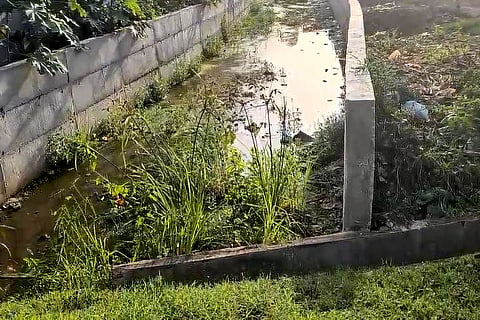

MYSURU: Millions of litres of untreated municipal sewage from HD Kote and Sargur taluks is flowing directly into the Kabini river every day due to the absence of sewage treatment plants (STPs) and underground drainage (UGD) networks, posing a serious threat to drinking water sources, wildlife habitats and public health.
The issue has now taken a legal turn with Mysuru-based advocate and Save Kabini Forum member Ravi Kumar issuing a legal notice to the chief secretary, urban development department, Karnataka State Pollution Control Board (KSPCB),
Mysuru deputy commissioner, HD Kote Town Municipal Council and Sargur Town Panchayat, demanding immediate intervention. The notice alleges that both the taluks lack a functional underground drainage system or a public sewage treatment plant, allowing raw sewage to enter the river unchecked.
The notice said officials of the Kabini Dam Project had flagged concerns over increasing faecal coliform levels and deteriorating water quality, but no effective remedial measures have been implemented. It said the practice violates provisions of the Water (Prevention and Control of Pollution) Act, 1974, and the Environment (Protection) Act, 1986. It also accused the KSPCB of failing to enforce pollution control measures against the two local bodies.
Kabini is an important drinking water source for Mysuru and contributes to the Cauvery basin that supplies water to Bengaluru and several other downstream settlements.
Kabini pollution a threat to public health, ecology
Documents, photos and videos available with TNIE shows how the municipal councils in HD Kote and Sargur continue to discharge untreated domestic wastewater, commercial effluents and sewage into open stormwater drains that ultimately empty it into the Kabini river basin and its backwaters.
Ravi Kumar has sought immediate cessation of sewage discharge into the river, deployment of interim treatment technologies such as bioremediation and microbial treatment at discharge points within 15 days, and preparation of a time-bound plan to establish decentralised STPs and construct underground drainage systems under schemes such as Swachh Bharat Mission 2.0.
“Allowing untreated sewage to flow into it every day is a blatant violation of environmental laws and judicial directions. If the authorities fail to act within the stipulated period, we will have no option but to approach the National Green Tribunal to seek immediate intervention and accountability,” Ravi Kumar told TNIE.
