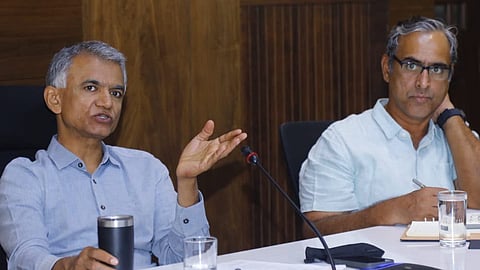

BENGALURU: Bengaluru Development Minister Krishna Byre Gowda on Monday announced that a month-long ‘Bengaluru Hasirooru’ (Green Bengaluru) campaign will be held from August 15. As part of the campaign, 64,000 saplings will be planted and 40,000 distributed among the people. Chairing a meeting on the sapling plantation programme by the Greater Bengaluru Authority’s (GBA) Forest Division, the minister told officials that the programme should not remain a mere paper exercise. Saplings must be planted, nurtured and protected.
He said there has been inadequate documentation and monitoring of saplings planted earlier and directed the officials to ensure that such lapses are not repeated. He told them to launch the campaign with active public participation through the Public-Private Planting Programme (PPPP).
The minister said only quality saplings will be planted this year. Species such as Mahogany, Tabebuia Rosea, Honge (Indian Beech), Neem and Jamun will be planted.
“Priority will be given to planting saplings in residential layouts with public participation. Once the requirements of residential areas are met, the remaining saplings will be planted in public spaces, around lakes and in parks,” he said.
Officials have been instructed to plant six-foot-tall saplings in properly prepared pits, maintaining a spacing of 12 ft.
A sum of Rs 9.64 crore has been earmarked in the budgets of the five city corporations, covering plantation as well as three years’ maintenance. Funds will be released based on successful planting and upkeep of saplings, he said.
A tracking system will be introduced for every sapling planted during this financial year. Details such as the number of saplings planted across the city and their geo-location will be made available on the corporation’s website, enabling the people to monitor the programme.
Before any tree is felled for development works undertaken by the corporation, Metro or any other government departments, the agency concerned must pay the forest department the cost of planting 10 saplings. These compensatory plantations have also been included in this year’s target.
