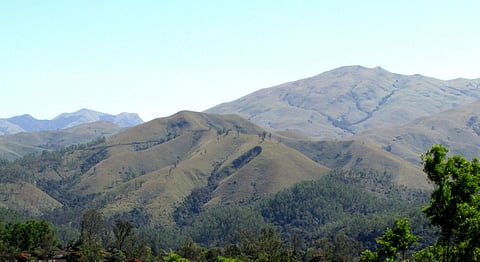

BENGALURU: To protect the Western Ghats landscape, a biodiversity hotspot, the Karnataka State Western Ghats Conservation Taskforce (KSWGCT) on Wednesday submitted the Master Policy Blueprint: The National Policy for Conservation of Western Ghats to state and central governments.
This is the first step from Karnataka, after the Kasturirangan and Madhav Gadgil reports were earlier rejected by the six states through which the Western Ghats run.
KSWGCT chairman, Mohammed Tabrez Alam Shariff, said, “This National Policy is built on a paradigm shift. It moves from conservation through prohibition to conservation through micro-precision, statutory vigilance, and economic incentivization. Leveraging ultra-high-resolution 100-square-meter cadastral GIS mapping, the blueprint promises precise demarcation that respects cultural and agricultural landscapes while protecting pristine ecosystems.”
The report stated, the policy resolves the specific flashpoints of the past-such as the Athirappilly and Gundia hydel disputes, and the Sindhudurg mining moratoriums-by transitioning governance. It recognises the state’s sovereignty over energy and infrastructure, subjecting enforcement to Lokayukta vigilance oversight and includes the introduction of Sub-Continental Payment for Ecosystem Services’(PES).
Report calls for micro-zoning to protect forests
“The policy ensures that standing forests become a source of immense federal revenue for local governments. This guarantees unanimous state acceptance, international acclaim, and absolute environmental security,” the report stated.
The policy’s blueprint is divided into five volumes: spatial governance and ecological baseline, statutory framework and cooperative federalism, socio-economic architecture and green equity, climate security and disaster risk reduction and fiscal architecture, and global alignment and apex oversight.
He said the core pillars for the policy include precision micro-zoning, under which fluid eco-sensitive zones will be created with village level mapping data. There will also be a Statutory Vigilance Mechanism, to insulate the framework from commercial pressures and vested interests and undertake period carrying-capacity field reports which will be periodically submitted to the Lokayukta.
The concern of economic incentives will also be addressed to help panchayats maintain zero-deforestation. Green Bonus will also be given to farmers shifting to multi-species agro-forestry. Standing forests become revenue generators for local communities, Shariff said.
It highlighted that hydropower projects be allowed with mandatory 30% ecological flow; regulated mining in transition zones; essential infrastructure permitted with wildlife safeguards. Shariff said this will address objections from Kerala, Maharashtra and others. The report also listed provisions for wildlife corridors, synchronized penalties, indigenous rights under FRA, climate resilience measures, green bonds and UNESCO Outstanding Universal Value protection for the 39 serial heritage clusters.
Shariff said the document has been submitted to the state and central government for pursual and five volumes will be released in a regulated manner. “It offers a model of pragmatic, inclusive conservation. It transforms guardians of the Ghats into empowered stakeholders in a shared national heritage , one that promises both ecological immortality and economic prosperity for its people,” he added.
