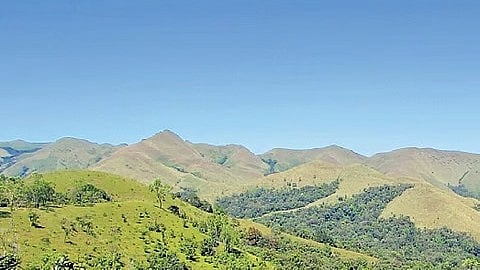

BENGALURU: Karnataka could soon have the largest share of the proposed Western Ghats Eco-Sensitive Zone (ESZ), with 20,668 sq. km identified for protection — the highest among the six states covered under the proposal. The move is part of the Central government’s seventh draft notification to finalise 56,825.7 sq. km of the Western Ghats as an Eco-Sensitive Zone, covering one of the world’s most important biodiversity hotspots. It is another attempt to reach a consensus with six states—Gujarat, Maharashtra, Goa, Karnataka, Tamil Nadu, and Kerala— where ESZ is spread.
The notification invites suggestions from all stakeholders within two months. The previous notification was issued two years ago. Within the ESZ, projects related to mining, thermal power plants, industries classified as red category, as well as building, construction, township, and area development projects are strictly prohibited. Meanwhile, projects related to hydropower, industries categorised as orange and white, and the diversion of forest land for non-forest purposes will be regulated. To oversee compliance, the government will establish a robust monitoring mechanism.
The initial draft notification for the demarcation of the Western Ghats ESZ was issued on March 10, 2014. Since then, re-notifications have been periodically issued in 2015, 2017, 2018, 2022, and the sixth draft notification was released on July 31, 2024. Experts attribute the repeated extensions of the draft notification to the lack of consensus between the central and state governments.
The prolonged delay in demarcating the boundaries of the ESZ stems from disagreements among the states regarding the activities restricted by the central government. States are reluctant to compromise their developmental priorities, as the ESZ regulations would limit their autonomy in the region. The Western Ghats Ecology Expert Panel, chaired by the renowned ecologist late Madhav Gadgil, submitted a report in 2011 that recommended the entire Western Ghats be designated as ESZ to ensure its conservation.
