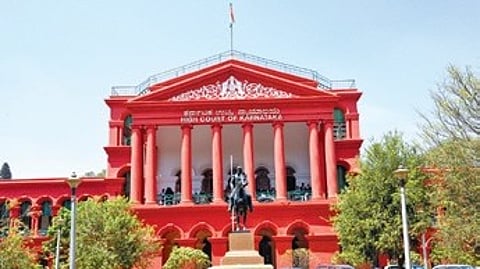

BENGALURU: Fifteen women working in key posts in various industrial establishments moved the Karnataka High Court (HC), challenging the legality of the State’s menstrual leave policy.
Stating that it is likely to hinder their career progression because the impugned notification, dated November 20 2025, mandates industrial establishments to give one day of paid leave per month to all permanent, contract, outsourced women employees aged between 18 and 52 years during their menstrual cycle, restricting it to 12 days per annum, discourages employers from hiring or promoting women employees in leadership positions.
They contended that the notification infringes upon the right to privacy and dignity, which is an integral part of the Right to Life under Article 21. The policy forces women to disclose a deeply private matter about their menstrual cycle to their employer, which can lead to social stigma, disturbing questions and a hostile work environment. It leaves women open to scrutiny, thereby violating their bodily autonomy and dignity, they alleged.
While the intention behind the policy may appear to be benevolent, its effect is counterproductive to the cause of women's empowerment and gender equality. It is a step backward that threatens to undo decades of progress made in integrating women into the workforce as equal participants, the petitioners claimed.
Contending that the action of the state is violative of Article 14, 15, 16 and 21 of the Constitution of India, the petitioners, through their counsel, stated that the classification created between men and women for the purpose of this special leave is not founded with the object of achieving workplace equality. Instead of promoting equality, it reinforces stereotypes about women being physically weaker and less capable, thereby defeating the very purpose of equality legislation, they said.
"The impugned notification, by singling out women for a specific biological function and mandating leave, inadvertently labels them as less productive or more prone to absenteeism, thereby making them less attractive candidates for employers in a highly competitive job market. This directly impacts their right to equal opportunity and to practice any profession freely," the petitioners stated.
They also stated that the policy is an act of "benevolent sexism", which under the guise of protection, perpetuates gender stereotypes and reinforces paternalistic attitudes. It was introduced on the old-fashioned notion that women are incapacitated by menstruation and need special protection, ignoring the reality that millions of women work efficiently even without such provision, they argued.
Two separate petitions filed by the Karnataka Employers' Association and Bengaluru Hotels' Association, challenging the menstrual leave policy, are already pending before the HC.
