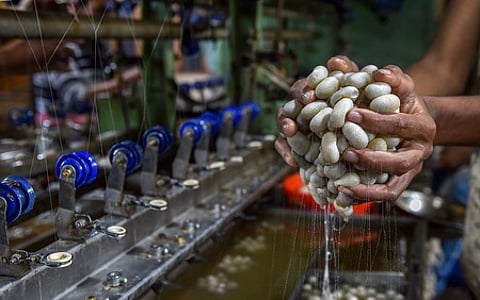

BENGALURU: Artificial intelligence (AI) is being combined with human expertise to boost the production of raw silk and allied products at the Central Silk Board under the Ministry of Textiles.
S Periyasamy, Director of the Central Silk Technological Research Institute (CSTRI), said the Board is actively adopting AI tools as part of its modernisation efforts.
“As AI is being used across sectors, the institute is not lagging behind. We are now introducing AI in the testing of standard boards and silk quality samples,” he said.
He explained that globally approved standard boards are used to test raw silk quality. Until now, the process of creating these boards and conducting quality tests has been carried out manually, which occasionally led to errors.
The introduction of AI will help ensure consistent quality and deliver faster, more accurate results. Periyasamy clarified that the move would not reduce the labour force but would enhance professionalism and efficiency.
“Even though China’s silk production has declined, it continues to be the global leader. Considering India’s silk diversity, rising domestic and international demand, and the global situation, we need to accelerate production. Strong quality assurance will support this effort,” he said, adding that while there is a shortage of skilled workers, human errors must be minimised.
The Ministry is collecting data on international standards to create a standardised format for AI-based templates used in quality testing. Conventional reeling machines are also being upgraded with AI tools that can identify and separate poor-quality cocoons based on colour, size and shape. This process has so far been done manually. To ensure acceptance among stakeholders, particularly farmers and traditional reelers, periodic meetings and workshops are being conducted to raise awareness about the technology.
According to Board data, India produces about 48,000–50,000 metric tonnes of raw silk annually and imports around 2,000 metric tonnes each year. Exports of finished silk products are valued at about `2,400 crore annually.
