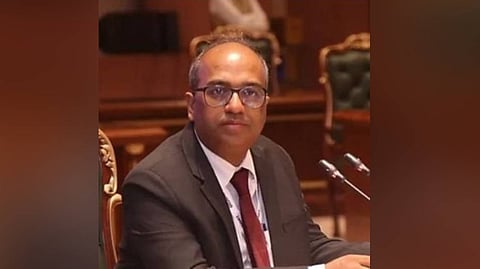

BENGALURU: Stressing the importance of reading at least one physical book a week, National Testing Agency (NTA) director general Abhishek Singh on Tuesday advised children to stay away from large language models (LLMs).
Speaking at a panel discussion on “Teaching, Learning and Testing in the AI Age” at the Bengaluru Tech Summit (BTS) 2026 on Tuesday, Singh said the NTA's primary focus was to make examinations as easy and transparent as possible for the average candidate.
“In a country like India, with a huge middle class, almost every young person goes through a lot [of competition and hardship]. We [at NTA] need to become all the more responsible. When around 10% of the aspirants going through a given test get qualified, we need to devise ways to decrease their hardships,” Singh said.
Singh said ensuring fairness would remain the central priority in integrating AI into the testing process. “We must use modern systems to ensure that the fairest possible method is implemented. A lot of thought goes into this, all of which requires AI,” he said.
He added that AI also poses a challenge to the crux of testing, given that with the adoption of AI, critical thinking is being impacted. “We need to create a process where rote learning isn’t assessed, but the candidates’ critical faculties are. So, human academicians have to be at the helm of AI,” he said.
The director general praised the ongoing digitisation of India's education infrastructure, pointing to DigiLocker as a key example. “DigiLocker is fully integrated in the country. We allow universities to verify credentials digitally, and the counselling systems built in for any selection process are digital and fraud proof. It all becomes seamless, benefitting both the student and the institution. Later, companies can assess your academic qualifications as well, giving them a transparent look at the applicants’ backgrounds,” he said.
Indian Institute of Technology Madras (IIT Madras) director Prof. Veezhinathan Kamakoti, who was also part of the panel, added, “AI always has its limits, and beyond that is where our tests must go. Foundations need to be tested, and no machine can help embolden your foundation.”
