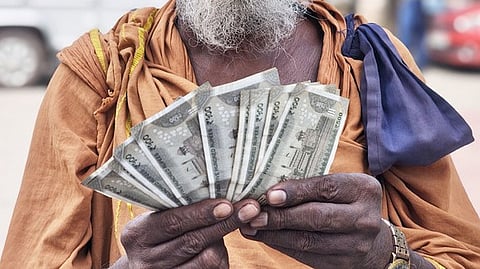

BENGALURU: Beggars can’t be choosers—despite its booming GDP, or precisely because of that, Karnataka has nearly 4,000 beggars. Crucially, 42% of them are from outside the state.
Karnataka has set up 15 rehabilitation centres under the Central Relief Committee (CRC) to end the practice of begging. The CRC is struggling to provide food, shelter and other basic amenities to the inmates, especially from the neighbouring states.
According to data furnished by the CRC to TNIE, the 15 rehab centres currently house 3,781 inmates, of whom 1,562 are from outside Karnataka. Data as of October 31, 2026, shows that 224 inmates are from Tamil Nadu, 50 from Kerala, 211 from Andhra Pradesh and 151 from Maharashtra, while the remaining inmates hail from other states, including those in North India.
Districts like Ballari, Mysuru, Dakshina Kannada, Kolar, Chitradurga that share their border with neighbouring states have large number of inmates.
Nearly Rs 240 crore is due for these rehab centres. “We are entirely dependent on beggary cess, which is three per cent of the property tax collected by the Greater Bengaluru Authority (GBA), urban local bodies and Gram Panchayats. Nearly Rs 240 crore in cess dues is yet to be released by these bodies,” a departmental source said.
The source said the limited funds available had to cover food, healthcare, hygiene, accommodation, rehabilitation programmes and staff salaries across all 15 centres. The CRC also provides an incentive of Rs 75 to every inmate who participates in its skill development programmes.
“Since some of them suffer from health, malnutrition, we also provide eggs and bananas. We are already struggling with limited resources,” the source said.
‘Can’t house trans persons due to lack of separate facilities’
“On top of that, have to take care of more than 1,500 inmates from outside the state. Technically, they may not fall under our responsibility, but we cannot turn them away. The very purpose of the CRC is to provide care and rehabilitation to all those in need,” the source added.
Apart from financial constraints, the CRC faces challenges in identifying and rehabilitating people who travel to Karnataka from neighbouring states solely to beg.
“A large number of people from Tamil Nadu, Andhra Pradesh, Telangana and even Maharashtra travel to Karnataka for begging and return to their villages by night. It is difficult to identify and apprehend them. Begging practices have also changed over the years. Many no longer seek food but use QR codes to seek money, pose as vendors selling pens and flowers or bring cattle along. Their lifestyles and circumstances in their native states are different, making it difficult for us to assess their backgrounds,” a source said.
The 300-acre land donated by the then Mysuru Maharaja Jayachamarajendra Wadiyar Bahadur in 1944 to prevent beggary in the state, which houses the CRC rehabilitation facilities, is now grappling with several challenges.
“Indore has declared itself a beggary-free district and we aspire to achieve a similar status. We face several challenges, particularly with the influx of people from other states,” the source said.
Officials also pointed to the difficulty of accommodating transgender persons in the existing facilities. “We cannot accommodate them along with other inmates due to the lack of separate facilities. Many of them are also from outside Karnataka,” an official said, requesting anonymity.
