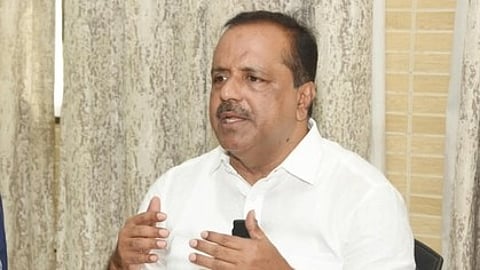

MANGALURU: Health and Family Welfare Minister U T Khader announced a series of major healthcare initiatives, including the expansion of the Dr Puneeth Rajkumar Hrudaya Jyothi Yojane to all district and taluk headquarters, free chemotherapy day-care centres for BPL families, AI-based breast cancer screening and improved dialysis services in government hospitals.
Talking to reporters on Tuesday, Khader said the Dr Puneeth Rajkumar Hrudaya Jyothi Yojane, which provides emergency cardiac care, is currently operational at 86 district and taluk headquarters across the State. The programme has so far facilitated 14.96 lakh ECG tests, leading to the identification of 22,579 cases of ST-Elevation Myocardial Infarction (STEMI), enabling timely treatment.
Under the scheme, patients with suspected cardiac emergencies undergo an ECG at a nearby taluk hospital. If abnormalities indicating a heart attack are detected, they are immediately administered life-saving medication before being shifted to a district hospital for angioplasty or other advanced cardiac interventions. The government now plans to extend the facility to all district and taluk headquarters to improve access to emergency cardiac care.
Khader also announced that chemotherapy day-care centres will be established in every district hospital within the next three months and later expanded to taluk hospitals. The chemotherapy services will be provided free of cost to patients belonging to BPL families.
The minister said the government will provide monthly prophylactic injections to haemophilia patients from BPL families under the Kusuma Sanjeevini programme. Currently, patients receive seven to eight costly injections only after bleeding episodes begin.
