
BENGALURU: Denmark is focusing on Tier-2 cities like Coimbatore, Ahmedabad, Thiruvananthapuram, Vadodara, and Indore as sites of potential investments, owing to the cities offering “significantly lower operating costs, lower attrition rates, and supportive state-level incentives.”
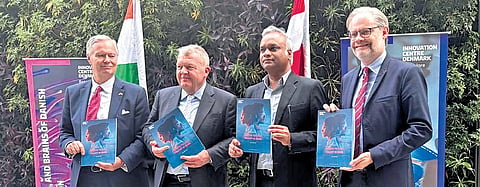
The intent was expressed in a report titled “Access to Tech Talent in India”, compiled by the Innovation Centre Denmark in Bengaluru, which was released by Denmark’s Minister for Foreign Affairs Lars Løkke Rasmussen here on Friday.
The report underlines a crucial vulnerability in Denmark: “While the country benefits from strong digital infrastructure and a high quality of life, Danish companies struggle to employ and retain IT specialists. Without access to these advanced skills, the consequences could be severe: economic growth may slow, Danish competitiveness could be weakened, and innovation across the business sector risks being stifled,” the report states.
According to the report, Denmark’s labour shortage stems from a “limited domestic pipeline of IT and engineering graduates”, amongst other factors; in this context, specifically in India, Danish companies are looking at policy-friendly states like Karnataka, where they can establish global capability centres (GCCs).
“Karnataka’s GCC Policy and Tamil Nadu’s Global Capability Hub Scheme actively promote local investment. Many of these cities also offer domain specialisations, such as Pune in automotive technologies and Chennai in logistics, while their proximity to universities strengthens the talent pipeline,” the report states.
Karnataka is notably singled out by the report, besides its GCC policy, for its “rental and skilling incentives, investment subsidies, infrastructure support, and R&D funding to expand GCCs in Bengaluru and surrounding regions.”
Bengaluru, Hyderabad, Pune, Chennai, and New Delhi’s National Capital Region (NCR) are deemed to be hubs that combine a high concentration of engineering talent, strong startup activity, deep access to venture capital, and close links between academia and industry.
Denmark’s core answer to its talent crisis is not necessarily a direct channel of labour influx from India, but the establishment of offshore GCCs in critical and compatible locations.
