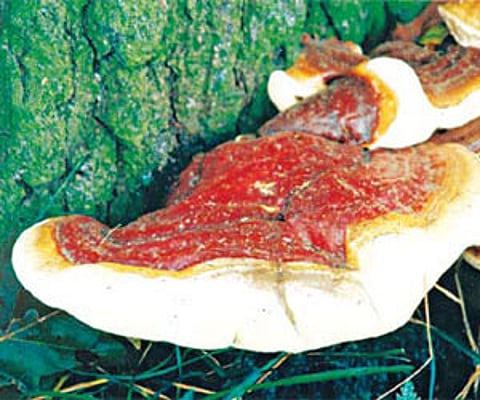

THRISSUR: Researchers attached to the Amala Cancer Research Centre in Thrissur have found that extracts of Ganoderma Lucidum, a medical red mushroom abounding in the tropical areas of South India, has high capacity to resist and reduce cancer cells.
The extracts of Ganoderma Lucidum also protect healthy cells from the impact of radiation therapy in cancer patients, which would be useful in palliative care.
According to Prof Dr K K Janardhanan, former deputy director of the Central Institute of Medicinal and Aromatic Plants, Lucknow, who heads a group of scientists who do research exclusively on mushrooms in Amala, the triterpenes and polysaccharides in the red mushroom function as natural agents that restrict as well as reduce cancer cells.
"The extracts also function as adjuvant (addon) in radiotherapy, for cancer regression and prevention of radiation-induced cellular damage in normal tissues," he said.
"The red mushrooms, which is considered as a panacea in Chinese medicine for the past centuries, has been reported to have a number of novel biological activities in the past. Our recent studies revealed that the red mushroom found in tropical areas of South India are more effective than the mushrooms obtained in China and other parts of the world, which is in fact a significant finding considering the nonavailability of cheap and nontoxic medicines in our domestic market. We believe that, once processed, the red mushroom would be a great relief to the country that has millions of cancer patients," Janardhanan said.
The previous investigations done by the Amala team had demonstrated the antioxidant, antiinflammatory and anticancer activities of aqueousmethanolic extract of Ganoderma Lucidum occurring in South India.
They extended the studies to evaluate the effect of this mushroom extract on the prevention of mammary adenocarcinoma in rats and skin cancer in mice.
Mammary cancers were induced by oral administration of 7,12dimethylbenz(a)anthracene (DMBA), a substance widely used in research laboratories for studying cancer, in female Sprague Dawley rats.
Cancer cells were induced by topical application of DMBA and promoted by croton oil on Balb/c mice.
The experimental results indicated that Ganoderma Lucidum showed significant cancerreducing activity against DMBAinduced mammary and skin cancers in a dosedependent manner.
The administration of the mushroom extract showed profound effect on cancer induction, cancer latency period and cancer proliferation of both mammary as well as breast cancers.
The results thus reveal that the aqueousmehanolic extract of Ganoderma Lucidum possessed significant protective effect against DMBAinduced mammary and breast cancers.The findings suggest the potential therapeutic use of Ganoderma Lucidum in cancer chemoprevention.