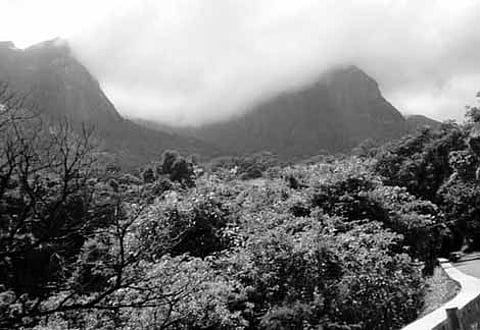

After six years of campaigning and waiting, the Western Ghats have finally been given the status of a natural World Heritage site by the United Nations Educational, Scientific and Cultural Organisation (UNESCO).
The UNESCO identified it as an area representing prominent spots of biodiversity that must be identified, protected and conserved by a global community.
The Natural World Heritage Sites are selected for their outstanding universal value, based on the magnitude of identifiable biological and cultural significance by the World Heritage Convention at its annual meeting in St.Petersburg, Russia.
A total of five natural World Heritage Sites were inscribed during the present session of the World Heritage Committee.
These include Lakes of Ounianga (Chad); Sangha Trinational (Cameroon, Central African Republic, Congo); Chengjiang Fossil Site (China); Western Ghats (India); and Lena Pillars Nature Park (Russian Federation).
Rock Islands Southern Lagoon (Palau) was inscribed as a mixed natural and cultural site. The World Heritage Programme coordinates the work of the International Union for Conservation of Nature (IUCN), on the UNESCO World Heritage Convention, which is one of the most important global nature conservation instruments.
The UNESCO World Heritage Convention provides a unique framework for securing the conservation of over 200 of the world’s most important natural areas, recognised as being of Outstanding Universal Value.
“Older than the Himalayan Mountain Range, the mountain chain of the Western Ghats represents geomorphic features of immense importance with unique biophysical and ecological processes. The high montane forest ecosystems of the site influence the Indian monsoon weather pattern.
Moderating the tropical climate of the region, it presents one of the best examples of the monsoon system on the planet,” said the UNESCO and IUCN websites.
The websites further added: “The site also has an exceptionally high-level of biological diversity and endemism. It is recognised as one of the world’s eight ‘hottest hotspots’ of biological diversity.”
“The forests of the site include some of the best representatives of non-equatorial tropical evergreen forests anywhere and are home to at least 325 globally threatened flora, fauna, bird, amphibian, reptile and fish species,” said the website.
Protected areas are at the core of efforts towards conserving nature and the services it provides us - food, clean water supply, medicines and protection from the impacts of natural disasters. Their role in helping mitigate and adapt to climate change is also increasingly recognised; it has been estimated that the global network of protected areas stores at least 15 per cent of terrestrial carbon.
“The Western Ghats and Lena Pillars are certainly regions that hold spectacular natural values, but IUCN’s evaluations considered that more work was needed on these nominations to meet the standards the Convention has set in its Operational Guidelines,” says Tim Badman, director of IUCN’s World Heritage Programme.
“We welcome these sites to the World Heritage List, but note the conservation challenges that they face will need additional monitoring by the World Heritage Committee to ensure that these sites meet the requirements that accompany listing as flagships for global conservation. IUCN is ready to assist the states in that task.”