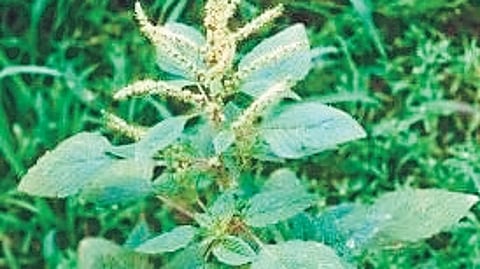

THIRUVANANTHAPURAM: Native edible plants are making their way to schools through a new scheme proposed by the Kerala State Biodiversity Board (KSBB). Titled ‘Wild Edible Plant Gardens in Schools’, the project will see selected schools developing a garden to study the indigenous plants and to incorporate edible wild plants into the school diet.
Plants like spiny spinach, sissoo spinach, spadeleaf, taro, etc will be cultivated in schools. However, only traditional crops that are validated by the current knowledge system will be incorporated into the diet, whereas the rest will be used for research and awareness purposes.
“The main aim of this project is to conserve the agro-biodiversity of our state,” said KSBB member secretary V Balakrishnan. Stating that the board is trying to work through the 4C principle- Conservation, Cultivation, Consumption and Commerce, he said that the scheme will also ensure nutritional security for children. Even though the business aspect is not aimed in the project, schools can conduct various activities like seed fests to promote knowledge on crop varieties.

Recent studies have shown that over 100 varieties of leafy vegetables and 30 different tubers are commonly used by tribal communities. “We are trying to incorporate their knowledge too, in our path of biodiversity conservation,” he added. The board is also putting their efforts into conserving certain pulses and wild varieties of commonly used leafy vegetables, which can be seen in the Western Ghats.
The development and maintenance of the garden will be through school biodiversity clubs established by the board, which will give financial assistance for the same. Representatives from the clubs will be given training from qualified resource persons to identify, collect and conserve these species. Each school will cultivate 2-3 plants, which were traditionally used and locally seen.
The garden development procedure, which should be wrapped up by October 31, will be executed by following the guidelines provided by the board. The clubs in schools will also have the support of the Biodiversity Management Committees (BMCs) under the respective local self-government bodies.